
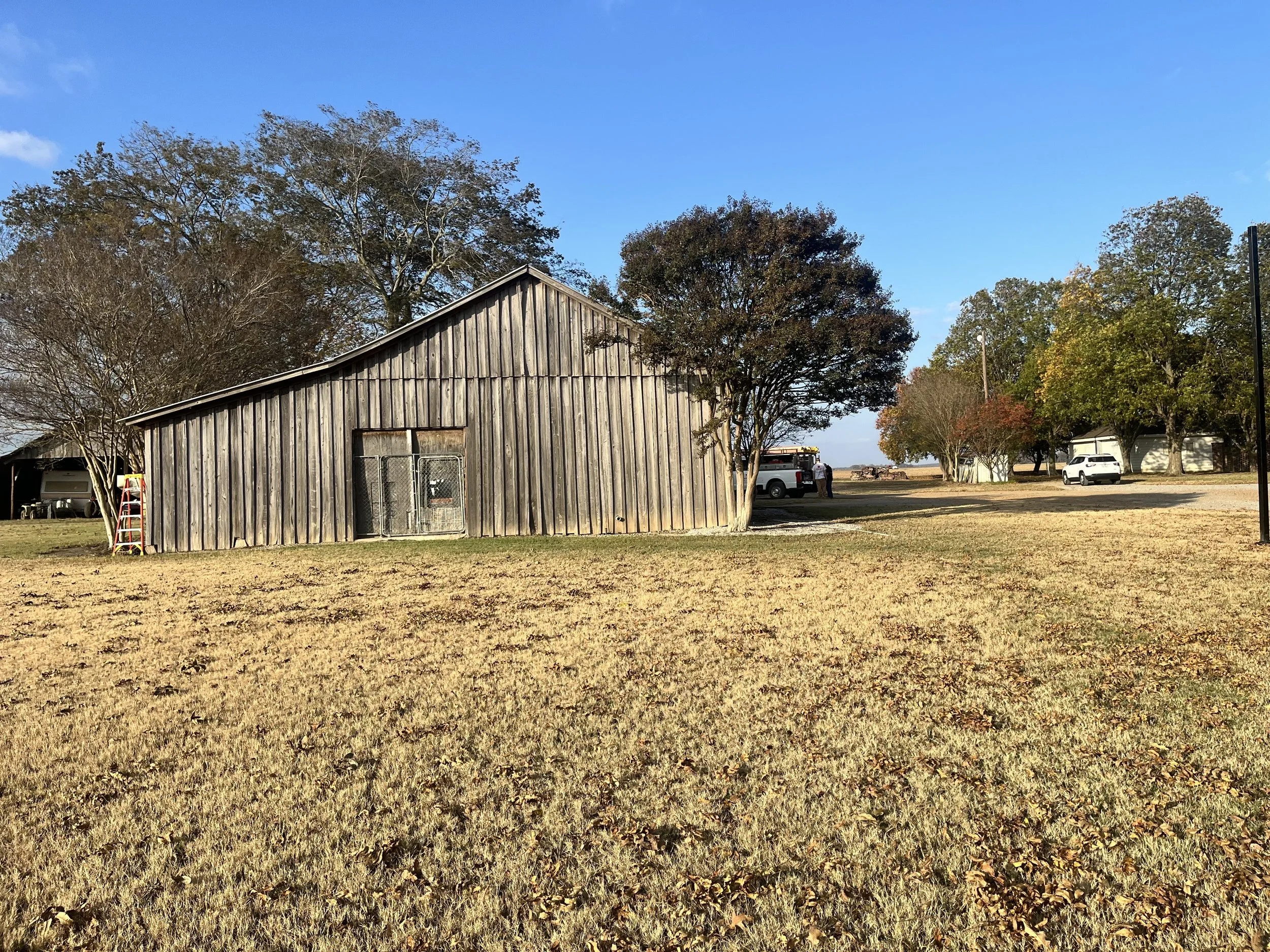
The barn where Emmett Till was murdered, Drew, Mississippi
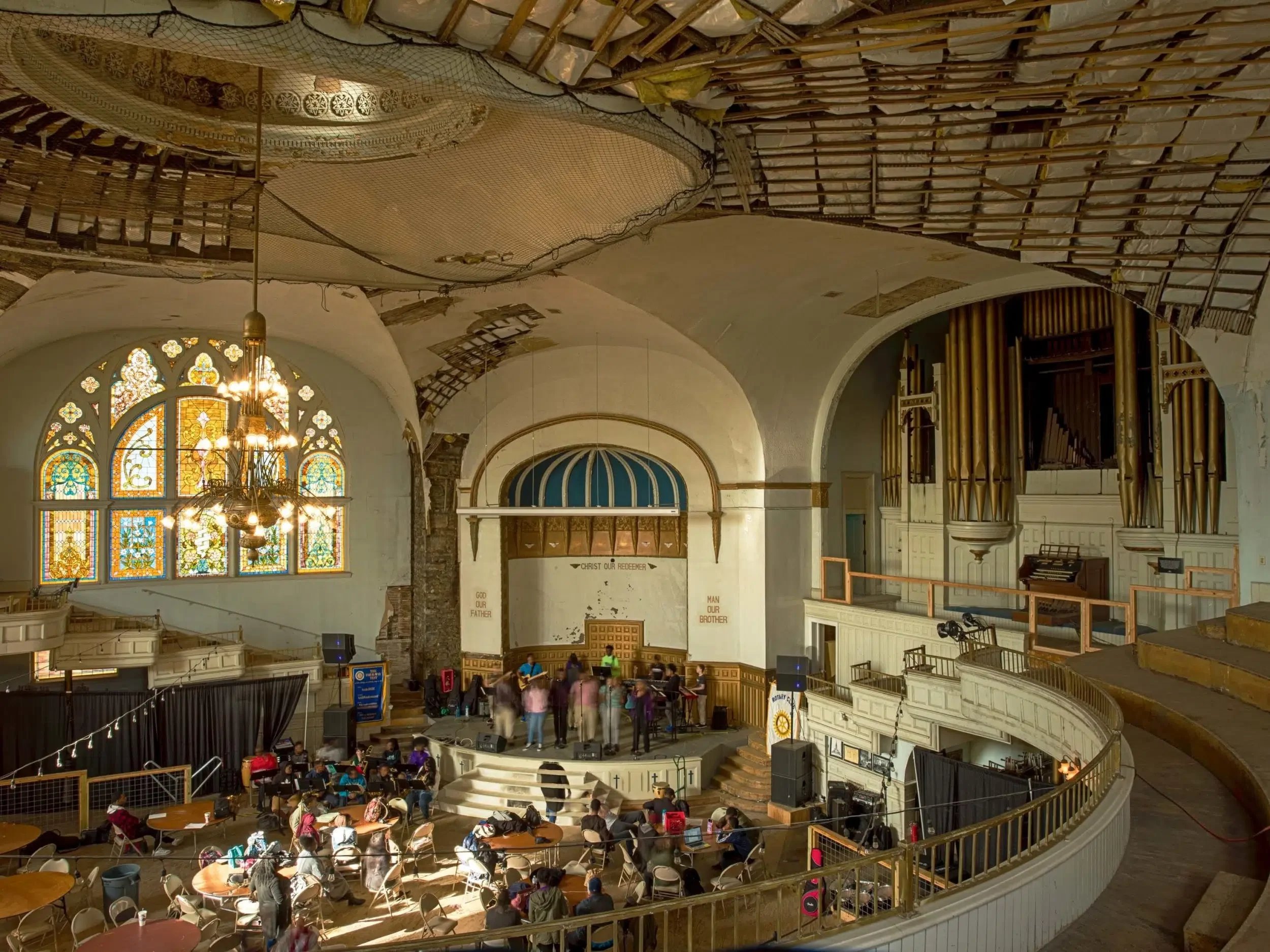
Historic Clayborn Temple, Memphis, Tennessee
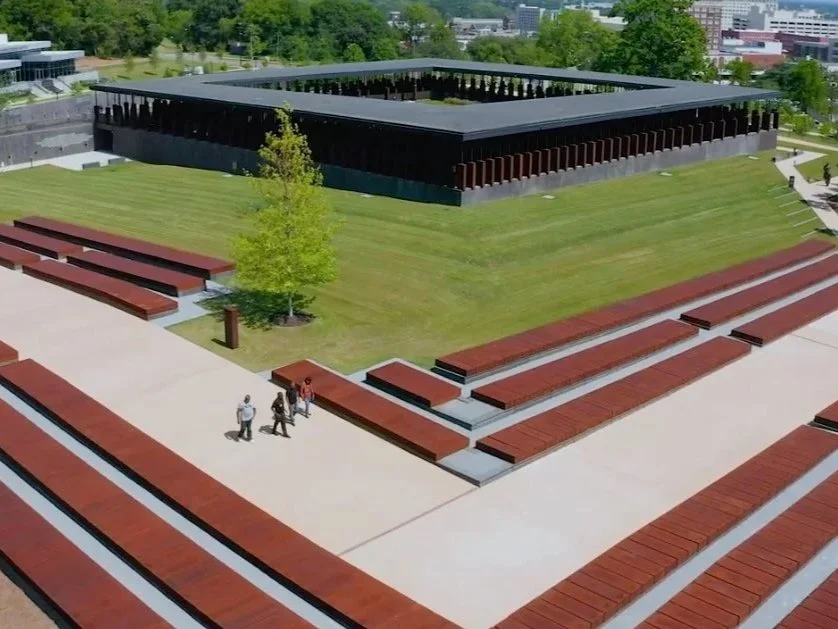
National Memorial for Peace and Justice, Montgomery, Alabama
Widen the Circle Fellows Network:
Study Trip to Alabama, Mississippi, and Tennessee
Purpose, Outcomes, and Shared Themes of the Fellowship Study Trip
This journey through Alabama, Mississippi, and Tennessee brings together members of the Widen the Circle Fellows Network from across the United States and Germany. It builds on the shared learning that began in Berlin and continues our collective effort to sustain remembrance work at a time when historical truth is increasingly contested.
In both countries, remembrance culture is under pressure—through political attacks, public resistance, defunding, and growing efforts to distort or erase difficult histories. Many of us carry out this work in isolation. This convening creates time and space to reconnect, deepen trust, and think together about how public memory operates—and how it can be defended, renewed, and mobilized.
A Comparative Journey
Although we will be visiting sites of remembrance in the U.S. South, this trip is not only about American history. As in Berlin, we will immerse ourselves in specific local histories while continually stepping back to ask questions that apply to memory work everywhere.
German participants are not guests but co-thinkers. Throughout the journey, we will make space to share practices, questions, and struggles and learn across our various contexts.
What We Hope This Convening Will Make Possible
By the end of the trip, participants should leave with:
A stronger network, renewing trust, solidarity, and the sense of not doing this work alone.
Sharpened strategic insight, grounded in real sites and practices, for responding to political pressure and public resistance.
Deeper comparative understanding of what travels across contexts and what does not.
Greater resilience and care, supported by shared language around trauma, burnout, and ethical limits.
A foundation for continued collaboration beyond this convening
Questions and Themes We Will Carry Across the Trip
Rather than seeking definitive answers, we will return to shared questions such as:
Who has agency to shape public memory? How is that agency recognized, sustained, or challenged by other stakeholders?
How do grassroots and official forms of remembrance differ, and when do they support or undermine one another?
How can memory sites honor those most harmed by violence while still confronting those who have benefited from it?
When does remembrance contribute to justice—and when does it risk becoming symbolic?
How can memory move people from knowledge to witnessing, and from witnessing to responsibility, empathy and action?
Memory as a Living Ecosystem
We approach remembrance not as something fixed but as a living ecosystem. Memory is carried through personal testimony, community archives, monuments, museums, education, public ritual, art, music, foodways, and place—operating across personal, institutional, community, and state levels.
Memory can also reflect back to us information about ourselves and our contexts. It is often alive and sacred, helping us connect and make meaning of our landscapes, music, faith traditions, and everyday practices. It can be political, revealing how power operates in the present. It highlights our role as witnesses and the responsibilities we may have to the dead, to survivors, and to future generations.
And of course, remembrance work is never finished. Our trip together is both an act of memory, of legacy, and continuing to build the ecosystem together.
Remembering as a Shared Practice
Grounded in an ethic of Ubuntu, this convening invites us to practice remembrance together—not as detached observers but as witnesses in relationship with people, places, and histories. In doing so, we strengthen our collective capacity to defend historical truth and democratic memory—wherever we work.
Costs & Payment Schedule
This study trip is being organized as a network-driven pilot. We have worked intentionally to keep costs as low as possible while ensuring a meaningful and well-supported experience. Through fundraising efforts, we have secured support to offset a number of shared program expenses, including:
Honoraria for guest speakers and local practitioners
Entrance fees to sites and museums
Rental space for gatherings and community events
Additional meals when hosting local partners
Certain shared program-related expenses
Many of the spaces and contributions from fellows and community partners are being offered generously and, in some cases, pro bono. The participant fee of $2,200 is designed to cover core logistical costs, including:
Hotel accommodations throughout the trip
Group meals
No portion of the participant fee is allocated to institutional overhead; it is designed solely to cover the direct expenses of hotel and group meals.
Participants are also responsible for their own airfare to Montgomery and return travel from Memphis.
If a participant does not require hotel accommodations in a given city — for example, because they live locally or have alternative housing arrangements — the cost may be reduced by $200 per night for each night lodging is not needed. Adjustments will be reflected in the final balance.
While we hope to pursue additional grants that may allow us to offer a limited number of partial scholarships, participants should plan on covering the full program fee and airfare.
Payment Schedule
To confirm participation, the following payment schedule will apply:
$500 non-refundable deposit due April 5, 2026
$850 due June 15, 2026
Final balance of $850 due August 15, 2026
If additional funding becomes available to support scholarships, adjustments will be made prior to the final payment deadline.
Participation Process
If this opportunity resonates with you, please submit your brief request for participation no later than Tuesday, March 17 using the following form: Request to Participate.
Participation is limited in order to maintain a focused and collaborative working group. We will follow up with next steps shortly after the submission deadline.
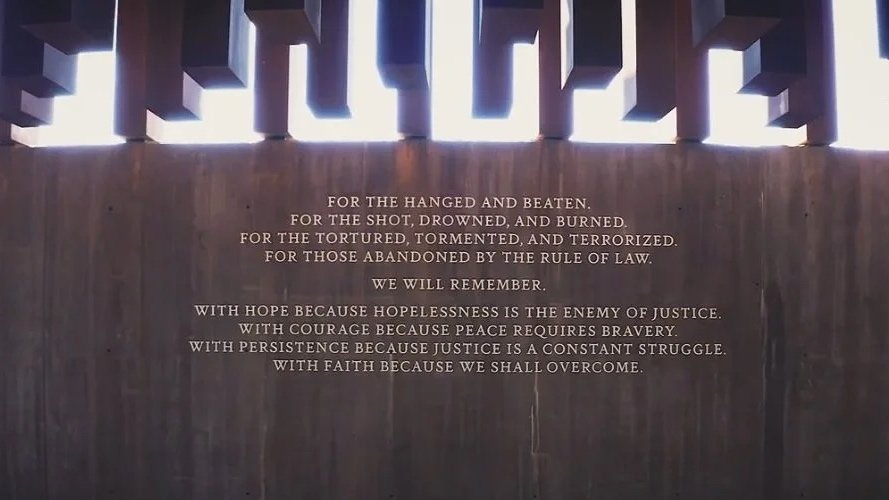
Inscription at the National Memorial for Peace and Justice, Montgomery, Alabama
Trip Overview
The core of the program will take place from Saturday, October 10 through Sunday, October 18, 2026, beginning in Montgomery, Alabama, and concluding in Memphis, Tennessee. (Note: German participants are strongly recommended to arrive one day early on Friday, October 9.)
Itinerary
Days 1-4: Montgomery and Selma, Alabama
Days 5-7: Mississippi
Days 7-9: Memphis, Tennessee
Days 1-4 Overview: Montgomery and Selma
Widen the Circle fellows will begin their journey in Montgomery and Selma, two Alabama cities whose histories are central to understanding the United States’ long struggle with racial injustice, democracy, and citizenship. From the rise of the cotton economy and the entrenchment of chattel slavery to Reconstruction, disfranchisement, and the modern Civil Rights Movement, this region has repeatedly shaped national debates about freedom and power. Montgomery was both the first capital of the Confederacy and, a century later, the birthplace of the Montgomery Bus Boycott and a key site of the Freedom Rides, while Selma emerged as a focal point of sustained, grassroots organizing for voting rights. These efforts culminated in the Selma-to-Montgomery marches–initially protests of police violence against suffrage activists and ultimately powerful catalysts for broad public support and passage of the Voting Rights Act of 1965.
Although renewed by Congress with bipartisan support in 2006, since 2013 the Voting Rights Act has been subject to numerous judicial challenges. The courts have alternately weakened federal oversight of election administration (Shelby County v. Holder, 2013) and affirmed that redistricting must provide racial minorities equal opportunity for representation (Allen v. Milligan, 2023). The 2023 decision was both a meaningful victory and also underscores how many hard-won democratic rights remain vulnerable and subject to ongoing legal and political challenge. A pending case from Louisiana, for example, has the potential to further erode the Voting Rights Act, potentially even reversing the outcome of the Milligan case.
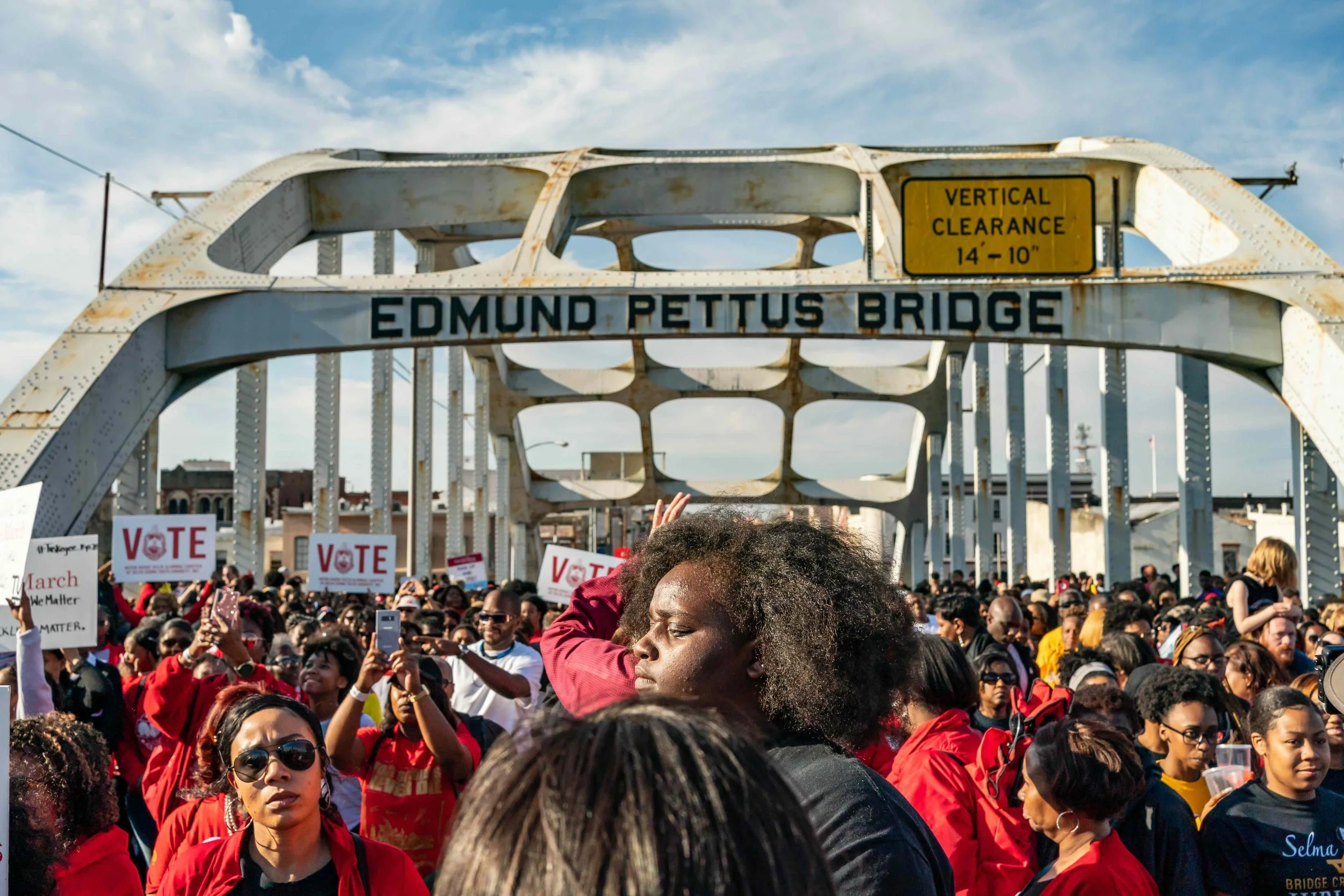
Today, Montgomery and Selma function as layered and often contested landscapes of remembrance, where the past is not settled history but an active point of reference for present-day struggles. In Montgomery, Black churches, community initiatives, and major institutions—including the Equal Justice Initiative’s Legacy Museum and National Memorial for Peace and Justice—exist alongside monuments commemorating the Confederacy, creating sharp spatial and interpretive contrasts. Selma’s remembrance landscape centers on the Edmund Pettus Bridge, a globally recognized symbol of Bloody Sunday, situated within a smaller city facing ongoing economic and infrastructural challenges. Together, these contexts invite critical questions about how histories are preserved, interpreted, and contested; who holds authority in shaping public memory; and how remembrance can help illuminate, sustain, and strengthen ongoing efforts toward democratic participation, community vitality, and justice in the present.
Hotel in Montgomery, Alabama: Elevation Convening Center and Hotel
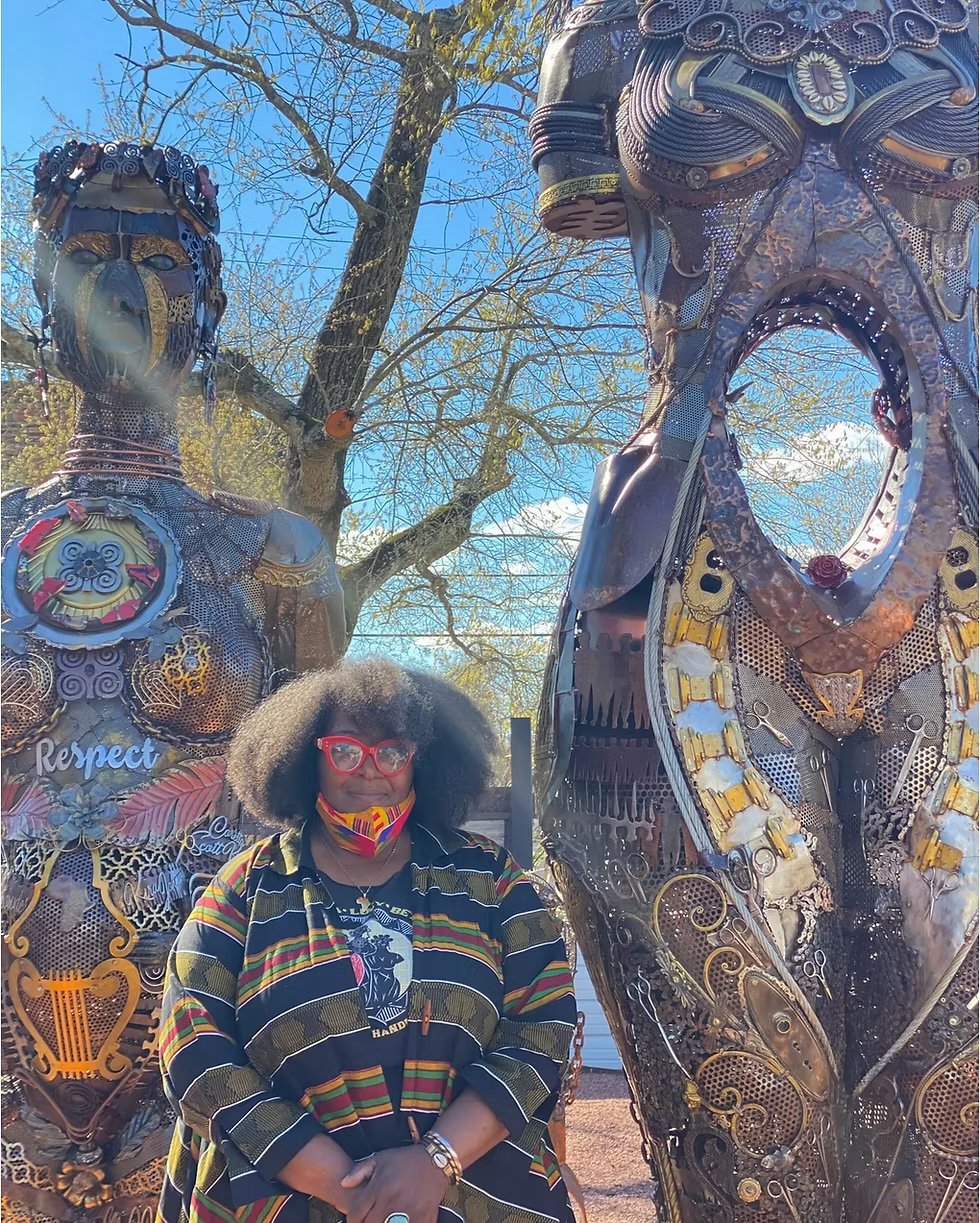
Michelle Browder at Mothers of Gynecology Park
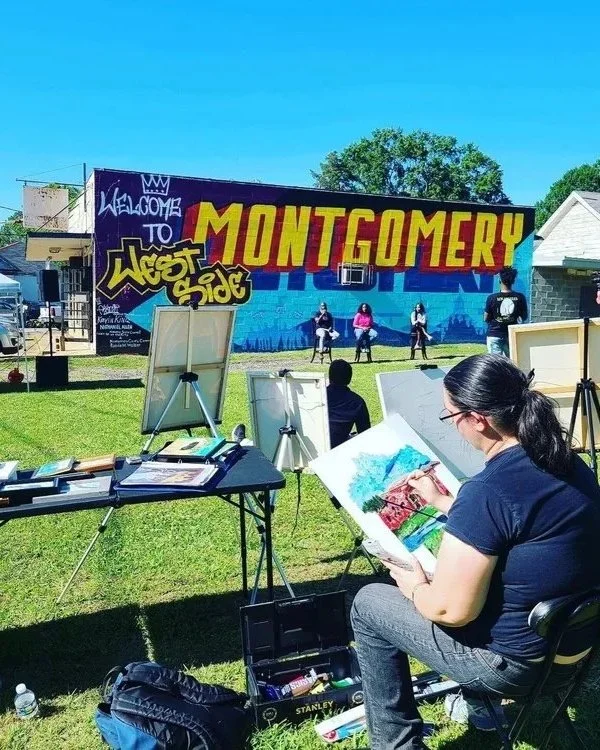
Kings Canvas, Montgomery, Alabama
Day 1 – Saturday, October 10
Arrival: (Participants from Germany are encouraged to arrive on Friday October 9th). Our trip begins in the afternoon, with a convening to build community across the Berlin Fellows cohorts. We’ll engage in the questions and themes of the study trip, and create community commitments for our time together.
From there, we will be led on a walking tour of Montgomery by Widen the Circle Berlin Fellow Steve Murray (2023 cohort) to explore the generational layers of public memory that exist throughout Montgomery. This will highlight the politics of memory, how memory has been contested, and how complicated the landscape of remembrance work can be, exploring questions such as:
How can long-silenced histories be brought back to public attention?
What is the relationship between historical understanding and justice?
We will continue our conversation with a private dinner at D’Road Cafe, a Venezuelan-Latin restaurant in the heart of downtown Montgomery.
Day 2 – Sunday, October 11
Today, we’ll begin the day with an orientation to the Equal Justice Initiative’s three “Legacy Sites,” which we will be visiting throughout the day.
The Legacy Sites invite visitors to reckon with our history of racial injustice in places where that history was lived. Situated on lands occupied by Indigenous people for millenia, in a region that hosted the rise of the cotton economy and would later become the heart of the Civil Rights movement, the Legacy Sites offer visitors a powerful opportunity to engage with the past and to reflect on the power of truth telling.
The Legacy Museum: Offers a powerful, immersive journey through America’s history of racial injustice. On the site of a cotton warehouse where enslaved Black people were forced to labor in bondage, the Legacy Museum tells the story of slavery in America and its legacy through interactive media, first-person narratives, world-class art, and data-rich exhibits.
The National Memorial: Is a sacred space for truth telling and reflection about racial terrorism and its legacy. Located on a hilltop overlooking Montgomery, the memorial names and honors more than 4,000 victims of racial terror lynchings between 1877 and 1950. It is the nation’s first comprehensive memorial dedicated to the legacy of Black Americans who were enslaved, terrorized by lynching, humiliated by racial segregation, and presumed guilty and dangerous.
Freedom Monument Sculpture Park: Honors the lives and memories of the 10 million Black people who were enslaved in America and celebrates their courage and resilience. At this 17-acre site along the very river where tens of thousands of enslaved people were trafficked, breathtaking art and original artifacts provide an immersive, interactive journey culminating at a monument to the formerly enslaved who embraced freedom at the end of the Civil War.
Some of us know these sites well, and for others it will be their first visit. Questions we will consider throughout the day include:
Can a society that does not recognize or own its own history ever be a just one? To what extent does racial justice depend on or require a full reckoning with America’s history of racism and white supremacy?
How should memory sites that aim to further racial justice and healing handle the complicated—and sometimes competing—needs of different groups? Can a single memory site effectively serve both people from the group that suffered oppression and those from the group that perpetrated it?
When curating a long and continuous history of violence and resistance, how do curators decide where to begin, where to end, and what connective threads hold the story together?
After a full day visiting these sites, we will convene at the hotel for debrief and connection.
Our dinner will be at The Sanctuary, a historic church building that has been transformed into a community gathering space. We will be joined by Jennifer Taylor Milligan, who has served as a senior attorney at the Equal Justice Initiative (EJI) in Montgomery, Alabama, where she represented incarcerated people challenging their convictions, sentences, and inhumane conditions of confinement. Jennifer also played a significant role in EJI’s public education work, researching, writing, and speaking about the relationship between mass incarceration and American racial history. She is a key partner of Bryan Stevenson and has helped shape the museum’s historical narrative. She will reflect on the challenging curatorial and ethical decisions involved in telling a long and ongoing history of racial violence and resistance. Her reflections will open a broader conversation about how we, as remembrance activists, navigate similar and different challenges in our work.
Day 3 – Monday, October 12
As we transition from visiting national sites that draw visitors from around the country and globe, today, we will turn to local Montgomery history, and various grassroots acts of remembrance.
We begin the day together to surface the questions we hold individually and collectively. We will then visit Harris House, a home that belonged to Dr. Richard Harris, Jr. and Mrs. Vera Harris. Dr. Harris served as a Tuskegee Airman before becoming a pharmacist and owner of Dean Drug Store, Montgomery’s oldest Black pharmacy. His home became a safe house and meeting ground throughout the Civil Rights Movement for many leaders in the movement, including the Freedom Riders, John Lewis, Martin Luther King, Jr., Diane Nash, and more. We will be joined by Dr. Valda Harris Montgomery, one of the children of Dr. and Mrs. Harris. Growing up, she was closely in contact with the leaders and activists of the movement. Her proximity also pushed her to become involved in the movement herself. At this historic site, with her testimony, we explore questions together such as:
What do spaces themselves carry—and what kinds of knowledge only emerge when stories are rooted in place rather than told at a distance?
As eyewitnesses to state violence and resistance pass on, who has the authority—and ethical right—to tell these stories next?
What changes when memory moves from lived experience to stewardship?
We will then tour Mothers of Gynecology Park, which includes a monument honoring Anarcha, Lucy, and Betsey, enslaved women who endured experimental gynecological surgeries performed by physician J. Marion Sims. Drawing on a comprehensive re-examination of Sims’s career and archival documents that reveal the lives and fates of the women, the site acts as a first step toward teaching and reimagining the true story of the nation, facing the injustice of the past and honoring the courage of overlooked heroes. The site is part of More Up Campus, a larger effort to reckon with the past and address inequities today. The campus includes a women’s health clinic to address maternal inequities, a museum that weaves together art, history and social change, and a home to house traveling social justice activists. We will be joined by the Executive and Artistic Director Michelle Browder, who will lead us through this site, sharing questions like:
Can memory offer healing?
How can art be used as part of a project of historical remembrance and historical justice?
How do we move from remembrance into other forms of action?
Next we will visit The King’s Canvas, a nonprofit artist space located on the route of the Selma to Montgomery March. There, we will engage in conversation with Founder and Executive Director Kevin King, a Widen the Circle Berlin Fellow (2023 cohort), about his use of art to inspire, build community, and support economic enhancement. Together, we will explore questions such as:
How do we create many different access points to memory work and many different ways to engage with it?
How and when can sites of remembrance be used to further community revitalization or economic development?
After some down time, we will gather for dinner at Martha’s Place, a nationally known stop for anyone who visits the Deep South and a culinary fixture of life for Montgomery residents. We will hear the origin story of this amazing establishment from Martha Hawkins herself, who founded her restaurant as an act of faith and resilience.
Day 4 – Tuesday, October 13
Today we will travel to Selma, Alabama, and go deep into the history of the civil rights movement and the 1965 Selma to Montgomery March. Throughout the day, we’ll consider:
How can sites from the civil rights movement both celebrate a history of resistance and recognize the limitations of the victories that were won? How can civil rights memory be mobilized as a resource for activism today?
How do these sites tell the story of the freedom struggle? What is their narrative arc? Where do they begin and how do they end?
What values, priorities, and/or economic factors tend to guide decisions about which historic sites are preserved and which histories risk being lost when those values go unexamined?
In Selma we will be joined by Charles Maudlin, a youth leader during the Civil Rights Movement and a key participant in the march from Selma to Montgomery. With Charles, we will visit several sites in Selma. At Brown Chapel AME Church, we will meet Joyce Parrish O’Neal, an active participant in the Civil Rights Movement as a teenager. In 1965, she joined daily marches organized through Brown Chapel, demanding voting rights for African Americans and risking arrest and violence alongside other young demonstrators. Tiffany Tolbert, a member of the Widen the Circle Fellows Network (2025 cohort) will share about this site, its history in the voting rights movement, and work of preserving this site as a National Historic Landmark today.
We will take a walking tour through Selma itself, including the newly built Foot Soldier Park, the Edmund Pettus Bridge, and then travel on the Selma To Montgomery National Historic Trail, visiting the Student Nonviolence Coordinating Committee (SNCC) Freedom House and the Lowndesboro Schoolhouse.
The Lowndesboro Schoolhouse is one of the oldest surviving Reconstruction-era African American schoolhouses in the United States, and its origins are deeply rooted in the efforts of formerly enslaved citizens to secure education and religious fellowship in the face of systemic oppression. While there, we will hear about the importance of this site to local history and activism today. We will also be joined by Josephine Bolling McCall, the author of the book The Penalty for Success: My Father was Lynched in Lowndes County, Alabama, about her story attending the school, and more recently, uncovering her family’s history and her father’s murder.
As we transition back to Montgomery, we will visit the Alabama Department of Archives & History, where Director and Berlin Fellow Steve Murray (2023 cohort) will host us and share the work of the Archives. We will move beyond the public galleries to explore archival storage spaces where Alabama’s historical record is preserved and protected.
There, we will examine primary documents from the eras of enslavement, Reconstruction, Jim Crow, and the Civil Rights Movement—records that shaped lives, codified systems of power, and documented resistance. We will also visit the digitization lab to see how newspapers, photographs, manuscripts, and audiovisual recordings are reformatted and made freely accessible to anyone with an internet connection.
Our time together will explore the centrality of preservation and access to remembrance work: how materials are selected and protected; how the Archives represents Alabama’s history in its collections and museum spaces; and how specific materials, including those related to Indigenous history, are interpreted and shared. We will reflect together on questions such as:
Who are preservation spaces for today—and how should their narratives shift depending on audience, generation, or historical moment?
In times when history itself is politicized, what responsibility do archives and remembrance activists carry in safeguarding truth?
How do archives, museums, and other remembrance sites navigate political pressure to erase, distort, or restrict access to historical content?
Our evening event at the Archives will be a time of creative expression and conversation, including storytelling, music, and poetry. Community members from across Montgomery who are engaged in memory work will join us, creating space for dialogue that bridges archival history and lived experience. Widen the Circle Berlin Fellow Evan Milligan (2023 cohort) will be helping to curate this evening.
Days 5–7 Overview: Mississippi Delta
Next we will travel to the Mississippi Delta, a place immersed in history and contradictions. It is a place of rich land and poor people. It is a bioregion where the contours of the natural environment (flooding rivers, deep soils) weigh heavily on day-to-day life, and yet it is also a place known for its cultural production (the blues, southern literature). It is a place of vast, sometimes unimaginable poverty, and yet there remains to this day a wealthy planter class with second homes in Oxford and escapes on the Gulf shore. Finally, it is a place of genteel extravagance, gracious manners, and southern charm, all of which flowered in the vice-like grip of Jim Crow racism. The Delta was a place, Yvette Johnson writes, where planters “wore suits when they lynched you. They drank illegal whiskey from a clean glass. They delicately wiped their mouths on monogrammed handkerchiefs after they spat on you.”
Geographically speaking, the Mississippi Delta is a diamond-shaped expanse of land in the northwest corner of Mississippi, not to be confused with the river delta to the south where the Mississippi River fans out to meet the Gulf of Mexico. For those who know it, the Mississippi Delta can be distinguished by any number of features. Geographically, it sits between the Mississippi River and its eastern tributaries; ecologically, it is a massive alluvial floodplain; agriculturally, it was the site of the second cotton kingdom; economically, it is defined by the extremes of exceptional white wealth and extensive Black poverty; culturally, it is the “taproot of Black culture” and ground zero of white southern literature; and racially, it has inherited the legacy of once being known as the “worst place in the entire country for Negroes.” Because the land was flat and the soil deep, it became a place of immense wealth for white planters and, at the same time, a place of unspeakable horrors for Black people.
When the global price of cotton plummeted in the 1930s, the Delta crumbled. By the 21st century, the economic devastation of the Delta was so complete that Richard Grant labeled the region a “study in American ruin,” and Yvette Johnson speculated that it “takes a stranger driving through the Delta only an hour or two to see the human misery.”
All of this would indelibly mark the life, death, and commemoration of Emmett Till. Indeed, because Till commemoration did not arrive in the Delta until the 21st century (July 1, 2005, to be exact), the commemoration of the murder is virtually always set against a backdrop of poverty.
Hotel in Clarksdale, Mississippi: Travelers Hotel
Day 5 – Wednesday, October 14
We will begin early Wednesday morning, departing Montgomery for a five-and-a-half-hour journey into the Mississippi Delta. The drive itself is part of the work—time to leave familiar ground, to slow down, and to enter a landscape where history, memory, and silence sit close together. With breaks along the way, including a picnic lunch, we create space for rest, informal conversation, and transition.
As we travel, we carry a set of framing questions that will accompany us throughout the journey:
What does it mean to tell the truth about racial violence in a way that is honest but not exploitative, commemorative without becoming numbing?
How do places—especially places marked by willful erasure, repression or denial of memory —shape what a democracy remembers and what it forgets?
Who is this work of remembrance for: those who were harmed, those who benefited from silence, or those still trying to understand their inheritance?
How do we hold grief, anger, and compassion at the same time, without rushing toward closure or reconciliation?
We will arrive in Clarksdale, Mississippi, in the mid-afternoon and check into the Travelers Hotel at approximately 3 p.m. With the entire hotel reserved for our group, this space becomes a shared container for reflection, conversation, and community over the coming days.
After settling in, we will travel to Sumner, Mississippi. Every site we will visit makes the act of commemoration of Emmett Till—or its absence—visible, and our first visit sets the tone for the days ahead.
We will begin at the Tallahatchie County Courthouse, the site of the 1955 trial where an all-white jury acquitted the men accused of murdering 14-year-old Emmett Till. The injustice that unfolded here shocked the nation and cast a long shadow over the community. Today, the courtroom has been meticulously restored to its 1955 appearance. Standing in this space invites reflection on the limits and possibilities of justice, and on what it means for a democracy when injustice is not hidden, but carried out in full view. We will reflect on questions such as:
What does it mean to preserve a place of injustice rather than erase it?
How should we remember a criminal justice system designed to uphold white supremacy, and how might we use the history of this specific trial to foster conversations about systemic and structural racism today?
Decades after the trial, the silence surrounding Sumner slowly began to break. In 2006, the Emmett Till Interpretive Center was founded to confront this history through education, storytelling, and dialogue. In 2007, community members gathered on the courthouse steps to issue a public apology to the Till family—an acknowledgment of past wrongs and a commitment to a different future. Together, the courthouse and the Interpretive Center offer a powerful case study in delayed commemoration and the fragile work of reconciliation.
Following our visit and facilitated conversation, we will gather for dinner with community members at the Cassidy Bayou Club. The evening will center storytelling, music, and shared experience—an opportunity to listen deeply and to encounter the Delta not only as a site of trauma, but also as a place of creativity, memory, and living culture.
Day 6 – Thursday, October 15
Thursday will begin with a group debriefing, creating space to process the emotional and intellectual weight of the previous day. Together, we will surface questions that have emerged and prepare ourselves for a full day of site visits connected to the Emmett Till story.
Our first stop will be in Money, Mississippi, at the remains of Bryant’s Grocery and Meat Market—the small country store where Till whistled and Carolyn Bryant set the tragedy in motion. What happened inside this ordinary space would ripple far beyond Money, helping to ignite the modern Civil Rights Movement. Today, the building stands in ruins. The owners have refused to allow commemorative work to be done there, leaving the site to decay. Standing here, we will consider:
What does it mean when the place where a national tragedy began is allowed to remain in ruins?
How does neglect function as a form of memory—or of denial?
We will then visit the barn near Drew, Mississippi, where Emmett Till was tortured and killed. For nearly half a century, this site was deliberately written out of public memory to protect white murderers. It was erased from maps of the crime produced between 1956 and 2004. Only recently has this ground been publicly named and preserved. Its survival is due in large part to the courage and persistence of civil rights icon Gloria Dickerson.
Following our visit to the barn, we will gather for lunch with Gloria Dickerson at her nonprofit, We2gether Creating Change. Ms Dickerson’s work embodies a form of civic courage rooted in relationship, care, and persistence. Her stewardship of this site reminds us that commemoration is not only about marking the past but about protecting truth, sustaining community, and creating the conditions for change across generations. Sharing a meal together offers a rare opportunity to reflect on how remembrance becomes responsibility—and how local leadership carries the long work of truth-telling forward. As we move through this site and conversation, we’ll consider:
What are the consequences of deliberately removing a place of violence from public memory?
What obligations do we have when standing on ground where unspeakable harm occurred?
From there, we will travel to Mound Bayou, Mississippi—a town founded by formerly enslaved people and a powerful symbol of Black self-determination in the Delta. After Till’s body was recovered, it was brought here, where Black doctors and community members ensured that his remains were treated with dignity before being returned to Chicago. Mound Bayou invites a different set of reflections:
What does it mean that dignity and care followed violence, even when justice did not?
How does this site complicate the story of the Delta as only a place of terror and loss?
What can democracy learn from this quiet, necessary labor of care?
Our final site of the day will be the Tallahatchie River near Graball Landing and Glendora, where Till’s body may have been—and likely was—recovered from the water. While the precise details remain contested, the site is central to the story of racial commemoration in the United States. Signs posted here have been stolen, thrown into the river, shot at, and replaced repeatedly. One marker accumulated 317 bullet holes and is now housed in the Smithsonian. Today, the site bears the nation’s only bulletproof historical marker. As we visit, we’ll consider:
What happens when historical memory remains contested and is perceived as threatening?
How might memory be an act of resistance?
That evening, we will return to Clarksdale for dinner at a local blues club. This time is intentionally unstructured—a chance to rest, enjoy music and food, and experience another dimension of Delta life. The blues, born of hardship and resilience, offers its own form of testimony and survival.
Day 7 – Friday Morning, October 16
Friday morning will be devoted to collective reflection. As a group, we will consider what we have encountered, how these sites have shaped our understanding of truth and memory, and which questions now feel more urgent, unresolved, or personal.
Widen the Circle Berlin Fellows Patrick Weems (2023 cohort) and Dave Tell (2023 cohort) - who will be guiding us throughout our time in Mississippi—and members of the Emmett Till Interpretive Center team will join us for a facilitated conversation on commemoration, public memory, and the challenges of truth-telling in divided communities. This session invites us to move gently from reflection toward responsibility—sharing insights, strategies, and commitments that extend beyond this journey. We will reflect together on:
What does it mean to leave these sites without resolution?
How do we carry these stories forward without claiming them as our own?
What responsibilities do visitors take home—to families, communities, and institutions?
Late in the morning, we will pack our luggage and depart Clarksdale for Memphis, Tennessee. The drive will take approximately an hour and a half, with a picnic lunch along the way—one final pause before transition. We will arrive in Memphis around 2 p.m., with time to freshen up and prepare for the next phase of the journey.
Days 7–9 Overview: Memphis, Tennessee
We will now travel to our final destination: Memphis. Memphis is located in West Tennessee, a region shaped by plantation slavery, Mississippi River commerce, and the legacies of the Confederacy, while the state as a whole reflects deep internal divisions over race, power, and memory. Today, Tennessee is majority white, while Memphis is a majority-Black city—one of the largest in the United States—creating a stark demographic contrast that continues to shape whose histories are centered, contested, or marginalized across the state. As a border state with competing histories of enslavement, Unionist resistance, and post–Civil War retrenchment, Tennessee offers a critical lens for examining how racial hierarchies were rebuilt after emancipation through law, violence, and narrative control.
Within this context, Memphis is a city where the histories of enslavement, racial terror, labor struggle, faith, and cultural resistance converge—and where remembrance remains inseparable from action. As a Mississippi River port, Memphis was deeply embedded in the economy of slavery, a legacy that persisted after emancipation through racial violence and economic exploitation.
The city is central to the history of racial terror and resistance through Ida B. Wells, whose anti-lynching work emerged from the violence she witnessed in Memphis and exposed how white supremacy depended not only on terror but on controlling memory and public narrative. Memphis also stands at the heart of the modern civil rights movement through the 1968 sanitation workers’ strike, a defining labor and human rights struggle in which Black workers demanded dignity and collective power under the declaration I Am a Man. That movement brought Martin Luther King Jr. to Memphis as he built momentum toward launching the Poor People’s Campaign, linking the fight for civil rights to a broader struggle for economic justice.
Institutions such as Clayborn Temple remain living sites of memory—sacred and political spaces where past struggle informs present organizing. Memphis is a city known for its fight and grit, and civic engagement and activism are woven into the fabric of everyday life.
For remembrance activists, Memphis offers a powerful case study of memory as lived practice. Here, remembrance is not confined to museums or monuments; it continues in churches, neighborhoods, and ongoing movements for justice. Memphis challenges us to consider how memory can remain accountable to the communities from which it comes—and how remembering can become a form of responsibility, not closure.
Hotel in Memphis, Tennessee: Hyatt Centric Beale Street Memphis
Day 7 – Friday Afternoon, October 16
Our Memphis experience begins with a conversation hosted at the Facing History & Ourselves Memphis office exploring how to teach difficult histories in middle and high schools at a time when narratives about racism and civil rights in the United States are increasingly censored, restricted, or politically contested. Widen the Circle Berlin Fellows Steve Becton (2022 cohort) and Jocelyn Stanton (2025 cohort) will share their work, which focuses on equipping teachers with the skills, confidence, and strategies to facilitate challenging classroom conversations—even in deeply polarized environments.
Drawing on Facing History’s decades of work on the collapse of democracy in 1930s Germany, the rise of totalitarianism, and the steps that led to the Holocaust, alongside the history of U.S. civil and human rights struggles, we will also examine the power of comparative case studies. Exploring these histories together helps students understand patterns of injustice, democratic erosion, and the consequences of individual and collective choices—while careful framing avoids false equivalencies or oversimplification.
We will also reflect on what this work might teach us about engaging visitors at other historical memory sites: how lessons from classroom case studies—close reading of primary sources, structured dialogue, and moral inquiry—can support meaningful, ethical engagement with contested histories in multiple contexts.
How and when can we address a specific historical moment while encouraging visitors to reflect on larger questions of human behavior and moral responsibility?
What are the opportunities and challenges of education as remembrance work?
Following dinner, participants will join Memphis community members for an evening of storytelling, music, and shared meals. This gathering offers an opportunity to experience the creativity, resilience, and spirit of Memphis while building relationships with local artists, activists, and cultural leaders. Through conversation and cultural expression, participants will engage with the living traditions that continue to shape the city’s identity and civic life.
Day 8 –Saturday, October 17
Today we will begin by visiting the National Civil Rights Museum, which offers a powerful and immersive journey through the history of the American Civil Rights Movement. Built around the former Lorraine Motel—the site where Martin Luther King Jr. was assassinated on April 4, 1968—the museum stands as both a memorial and a call to continued action. Standing before Room 306 and the preserved balcony where Dr. King spent his final hours grounds history in a deeply human reality.
Beyond that solemn space, the museum tells a broader story. Through multimedia exhibits, restored settings, oral histories, and rare artifacts, it traces the struggle for civil and human rights from slavery and Reconstruction through the Montgomery Bus Boycott, sit-ins, Freedom Rides, and the Poor People’s Campaign. It honors the courage of countless known and unsung activists while challenging visitors to consider what it means to safeguard democratic values in times of polarization and historical distortion. It may ask us to consider:
How did Civil Rights Museums in the South come into being? What were the forces and goals behind their creation, and who is the intended audience?
What does “progress” mean if rights and democratic norms can be reversed?
In today’s political climate in the United States, how can a national museum respond to backlash or government-shaped narratives that distort or narrow historical truth?
When memory becomes contested, are we witnesses, stewards, or advocates?
We will then engage in a walking and driving tour of South Memphis, which will offer a window into the history, resilience, and cultural leadership of the city’s African American community. This neighborhood served as a center of economic enterprise, civic activism, and cultural innovation, shaping the social and political life of Black Memphis for generations.
Highlights include the home and legacy of Robert Church, a pioneering businessman whose investments helped build economic power and civic leadership in Memphis’s Black community. We will visit the office of Ida B. Wells, where she led anti-lynching campaigns and investigated the 1892 massacre at the People’s Grocery, a cooperative store founded by Black doctors and community leaders that was violently attacked by white mobs—an event that informed her reporting on racial violence, including the Tulsa Race Massacre.
Other stops include R. S. Lewis & Sons Funeral Home, where the body of Dr. King lay in repose, the birthplace of Aretha Franklin, and Clayborn Temple, a central organizing site during the 1968 sanitation workers’ strike. Passing along Beale Street, a historic hub of African American music, culture, and social life, participants will see how South Memphis reflects the city’s enduring legacy of struggle, creativity, and leadership.
As the final Memphis site visit, participants will engage with Widen the Circle Berlin Fellow Anasa Troutman (2025 cohort), founder of The BIG We, whose work integrates culture, community, and commerce to restore economic and narrative power to Memphis’s Black communities.
Centered on Historic Clayborn Temple, The BIG We acquires and restores culturally significant properties, activates them through storytelling, arts, and public programming, and builds entrepreneurial ecosystems that allow residents to own and benefit from the value they create. Their initiatives include entrepreneur acceleration, cooperative development, youth storytelling programs, and partnerships with civic and financial institutions to strengthen the cultural economy—transforming history into engines of community wealth and civic participation. Despite a recent arson fire at Clayborn Temple, restoration and activation efforts continue, reinforcing the site’s role as a hub for culture, organizing, and economic justice. Together, we’ll reflect on questions such as:
How can cultural heritage serve as a catalyst for community-driven economic and civic transformation?
What lessons from Clayborn Temple and The BIG We’s approach can be applied to other historical memory sites and to participants’ work in the U.S. and Germany?
How do we support communities in retaining ownership and agency over their stories and histories?
In our concluding session and dinner, participants will synthesize what we have learned together over the week, revisiting key questions, insights, and themes from site visits and conversations. Participants will reflect not only on remembrance work, but also on how to chart a way forward in the environments where we live and work, exploring connections between past struggles and present challenges related to equity, justice, and civic engagement. We may consider:
What unfinished work does this moment demand of us as remembrance activists?
Together, we will discuss strategies for action as a growing network of remembrance activists, considering how to support one another, expand impact, and foster meaningful change in communities across the United States and Germany. This session serves both as a moment to celebrate shared learning and as a launching point for continued collaboration and engagement.
Day 9 – Sunday, October 18
We will gather for an early breakfast and farewells before departing Memphis to travel home, concluding the Widen the Circle Fellows Network Study Trip.
Reading List for Deep South Study Tour
Our journey through Alabama, Mississippi, and Tennessee brings together members of the Widen the Circle Fellows Network from across the United States and Germany. It builds on the shared learning that began in Berlin and continues our collective effort to sustain remembrance work at a time when historical truth is increasingly contested.
In both countries, remembrance culture is under pressure—through political attacks, public resistance, defunding, and growing efforts to distort or erase difficult histories. Many of us carry out this work in isolation. This convening creates time and space to reconnect, deepen trust, and think together about how public memory operates—and how it can be defended, renewed, and mobilized.
To prepare for our trip, we are offering you a list of texts (articles, books, websites, videos) to engage with before traveling together. This collection includes resources suggested by Widen the Circle colleagues and fellow participants on the trip. When compiling these resources, we recognize that we all enter this history from different spaces, backgrounds, professional expertise, and proximity. We invite you to review the materials and choose those which best meet your needs for engaging on the trip. There are items that are general to the history and resources focused on the three states we will be visiting. We also have linked to websites hosted by the places we will be visiting throughout the agenda.
We recommend you explore the agenda and choose how you might delve into this additional information to prepare for these site-base visits. This reading list is a work in progress; if you have additional texts or expertise to share, please let us know by emailing Jocelyn (jocelyn.stanton@gmail.com).
Please note: Some of the documentaries and films we linked offer a free trailer, and may ask for a small fee for streaming. They also may be found on youtube at no cost. We are not sure if all films can be streamed in Germany.
General Resources
Read through the Trip Overview (above)
The trip overview compiled includes framing for each region, links to many sites, and details about the people we will be meeting. We recommend you read it thoroughly, both as a way to prepare for our trip together and to help you decide which readings to prioritize on this list.
Readings
Excerpts from Books
What Can and Can’t Be Said: Race, Uplift, and Monument Building in the Contemporary South, Dell Upton, Introduction and Chapter 1 (Recommended by Renee Romano)
The Civil Rights Movement in American Memory, book co-edited by Renee Romano. The introduction (“The Struggle over Memory”) provides some helpful background context about debates in the US about the memory of the movement.
Books
How the Word is Passed by Clint Smith
Walking with the Wind: A Memoir of the Movement by John Lewis and Mike D’Orso
Howard Zinn, SNCC: The New Abolitionists (Recommended by Alex Lichtenstein)
Charles E. Cobb, On the Road to Freedom: A Guided Tour of the Civil Rights Trail (Recommended by Alex Lichtenstein)
Claire Whitlinger, Between Remembrance and Repair (Recommended by Alex Lichtenstein)
Bruce Watson, Freedom Summer (Recommended by Alex Lichtenstein)
Patricia Sullivan, Days of Hope: Race and Democracy in the New Deal Era (Helpful for understanding advances and setbacks in the generation before the modern Civil Rights Movement; recommended by Steve Murray)
Dan Carter, The Politics of Rage: George Wallace, the Origins of the New Conservatism, and the Transformation of American Politics (Examines the essential role of demagoguery in suppressing African Americans during the movement and shaping American politics today; recommended by Steve Murray)
Gary May, Bending Toward Justice: The Voting Rights Act and the Transformation of American Democracy (Examines the tandem forces of grassroots activism and federal allies in advancing the movement; recommended by Steve Murray)
Fred Gray, Bus Ride to Justice: Changing the System by the System (This memoir by one of the key legal architects of the movement lends insight to the behind-the-scenes advocates who won essential litigation; recommended by Steve Murray)
Frye Gaillard, Cradle of Freedom: Alabama and the Movement That Changed America (Good overview for general audiences; recommended by Steve Murray)
J. Mills Thornton III, Dividing Lines: Municipal Politics and the Struggle for Civil Rights in Montgomery, Birmingham, and Selma (A hefty, detail-rich academic study; recommended by Steve Murray)
Douglas Blackmon, Slavery by Another Name: The Re-Enslavement of Black Americans from the Civil War to World War II (Examines convict leasing as a successor institution to slavery and a bridge to the modern incarceration movement; recommended by Steve Murray)
Alabama
Readings
The Black Belt by Allen Tullos (Recommended by Karlos Hill)
Essay by Steve Murray, describing the sites we will be visiting in Alabama. An excerpted portion of this essay appears in our agenda.
Visions of Victory: Evan Milligan reflects on voting rights setbacks after court decision, op-ed by Evan Milligan. This article was written by Evan Milligan, Berlin Fellow 2023 and plaintiff in the Milligan v. Allen Supreme Court case (2023) which upheld the Voting Rights Act in a case about redistricting. After the recent Supreme Court decision (Louisiana v. Callais) the judgement was vacated.
Four of the people we will meet in Alabama have written memoirs about their or their family’s experiences.
Finding My Own Way: A Journey to Wholeness Against the Odds by Sophia Bracy-Harris
Just a Neighbor: A Child’s Memoir of the Civil Rights Movement by Valda Harris Montgomery
Finding Martha’s Place: My Journey through Sin, Salvation and Lots of Soul Food by Martha Hawkins
The Penalty for Success: My Father was Lynched in Lowndes County, Alabama by Josephine Bolling McCall
Podcast
Interview with Bryan Stevenson on The Ezra Klein Show. In this conversation, Bryan Stevenson reflects on memory, justice, punishment, racial terror, and the work of confronting history in public. While the interview covers a wide range of issues, much of it speaks directly to the work of the Equal Justice Initiative and the three EJI sites we will visit in Montgomery. Please note that access may require a New York Times subscription.
Videos
Alabama’s 140-Year Class War, with Steve Suitts. In this 90-minute Third Draft interview, historian Steve Suitts discusses the long history of class conflict in Alabama politics, including the Black Belt, disenfranchisement, interracial class politics, and the ways race and class have shaped the state from the 19th century through the civil rights era. (Recommended by Steve Murray)
Testimony of Lynda Lowery, the youngest person on the march from Selma to Montgomery, recounting her experience during Blood Sunday.
Short historical overview videos, curated by Clint Smith, around moments in Black History
Historical Videos from the Selma to Montgomery March
Martin Luther King, Jr.’s speech at the conclusion of the Selma to Montgomery march
Newscast and historical footage from Selma about the march to Montgomery
Freedom Riders: This documentary highlights the Freedom Rides, a time from May until November 1961, where more than 400 black and white Americans risked their lives—and many endured savage beatings and imprisonment—for simply traveling together on buses and trains as they journeyed through the Deep South. Deliberately violating Jim Crow laws in order to test and challenge a segregated interstate travel system, the Freedom Riders met with bitter racism and mob violence along the way, sorely testing their belief in nonviolent activism. This documentary can be watched on YouTube here.
Mississippi
Readings
His Name was Emmett Till by Wright Thompson. (Recommended by Patrick Weems) (This article, featured in The Atlantic, led to the book The Barn, featured below. We do recommend all fellows read either the article or the book, as we will be spending multiple days with this history in this place together)
The Barn: The Secret History of a Murder in Mississippi by Wright Thompson
Racial Reckoning: Prosecuting America’s Civil Rights Murders, Chapter 2 by Renee Romano
Mississippi Delta by Charles Reagan Wilson (Recommended by Karlos Hill)
Founded by Freemen, Forgotten by Textbooks: The Men Reviving Mound Bayou
Videos
Freedom on my Mind, Academy Award® Nominated and Sundance Grand Jury Prize Winning documentary, Freedom On My Mind, vividly chronicles the complex and compelling history of the Mississippi voter registration struggles of 1961 to 1964: the interracial nature of the campaign, the tensions and conflicts, the fears and hopes. It is the story of youthful idealism and shared vision, of a generation who believed in and fought for the principles of democracy. This video can be streamed with a small fee. (Recommended by Alex Lichtenstein)
Tennessee
Readings
Transcript and video recording of Martin Luther King, Jr’s speech “I’ve Been to the Mountaintop.” This speech, delivered at the Mason Temple in Memphis, Tennessee, is the final speech delivered by Dr. King.
Videos
They’ve ‘turned the clock back on history’: TN Rep. Justin Jones on GOP’s forced redistricting. This news report highlights the week of May 10, 2026 when Tennessee Republicans redistricted and eliminated the state's only majority-Black congressional district. Democratic representative Justin Jones says we must call this moment for what it is. “Whether they do it with crosses and violence or with the sophistication of suits and decorum,” he warns the fight is far from over. They have “turned back the clock of history” and “we must err on the side of action.”
Short historical overview videos curated by Clint Smith around moments in Black History: Ida B. Wells
At the River I Stand: This documentary skillfully reconstructs the two eventful months that transformed a strike by Memphis sanitation workers into a national conflagration, and disentangles the complex historical forces that came together with the inevitability of tragedy at the death of Dr. Martin Luther King, Jr. You can watch a 5 minute overview at this link or rent the film for a small fee to see the entire documentary.