


Eric Ward
Dennis Banks, the charismatic and passionate champion of Native American tribal sovereignty, issued a challenge to young Eric Ward. It came in the form of a gentle question, but Eric heard it loud and clear.
At the time Ward was a student at Lane Community College in Eugene, Oregon, and had been assigned to escort Banks, who was on a speaking tour, from class to class. Banks was a cofounder and longtime leader of the American Indian Movement. He brought national attention to the plight of Native Americans and tribes, notably as a leader of the Trail of Broken Treaties cross-country caravan and subsequent occupation of the Bureau of Indian Affairs in Washington, D.C. in 1972 and 71-day occupation at Wounded Knee, South Dakota in 1973; and as an organizer of the Longest Walk, from California to Washington D.C. in 1978.
Ward himself had confronted racism and hate as a Black child bused to an all-white school during the racial desegregation of the 1970s. (These verbal attacks always came from adults, not other students, he says.) He loved music and as a teenager found a home in the emerging punk rock scene of the time, where interest in the music mattered more than racial and other divisions. Later, he worked against violent white nationalists and neo-Nazis trying to claim the scene for their own. He had become politicized when he moved from his native Long Beach, California, to Eugene, Oregon, and began to engage on community issues and causes. But he wasn’t ready for Banks’s question.
“Dennis Banks and I broke bread together and he turned to me and asked: ‘What are you about?’ That’s what Dennis Banks said: What are you about?” Ward recalls.
“I said something, you know — I’m a punk rocker, probably whatever … came to mind. He was very kind to me. He spoke a lot to me. And I realized that the next time someone asked me that question, I wanted to be able to answer it and answer it directly. That really shook me… and that’s what set me on the path.”
Ward helped found a local project called Communities Against Hate. They organized weekly public education programs on topics such as the Holocaust, antisemitism, homophobia, and the rise of the white nationalist movement. They held workshops on reproductive rights and on so-called “conversion” programs aimed at gays and lesbians, and on how to respond to hate crimes. And they distributed informational leaflets outside the workplaces and homes of neo-Nazis to expose people and organizations spreading hate.
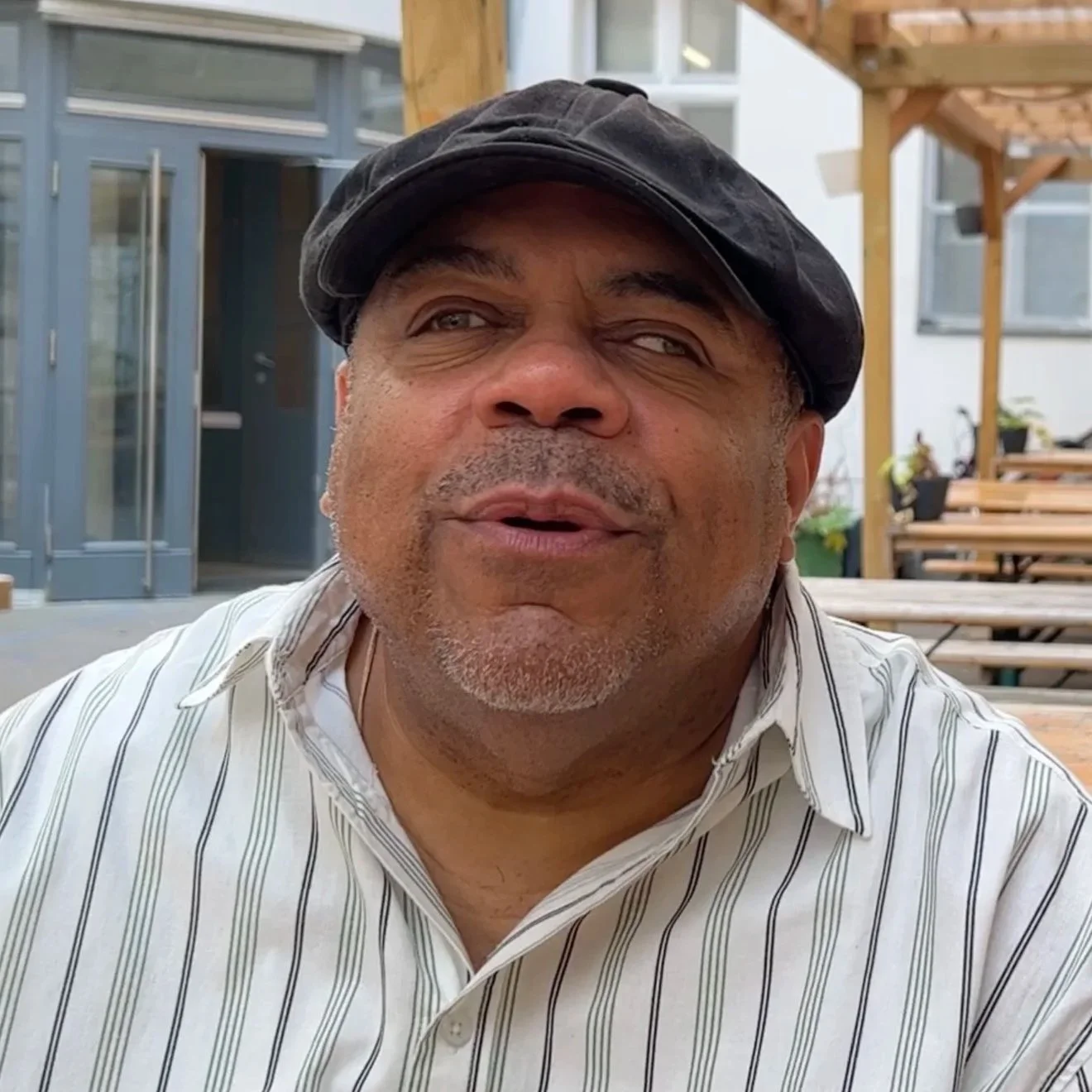
“Bigotry always moves from the margins into the mainstream. So typically civil society only addresses these issues when they bubble up, and then we treat it as if it came out of nowhere.”
“We were proud to have built a broad-based organization. It wasn’t just punk rockers. It was business owners. It was folks who were conservative and liberal, folks who were hippies, folks who worked in city government or were educators,” he says. “Our principal was that there was no room for bigotry. Bigotry wouldn’t provide an answer to the complex problems that we were facing in our community.”
That experience helped him realize that being an individual activist was not enough, Ward says.“It was really my path to understanding the need for systemic change and building organizations and community power…that communities need campaigners and organizers and educators.”
Today, Ward is one of America’s leading voices on authoritarianism, hate-fueled violence, antisemitism, and the struggle to sustain a multiracial, inclusive democracy. He is executive vice president of a national racial justice organization, Race Forward, and a senior fellow at the Southern Poverty Law Center. He has testified before Congress on extremism and anti-democracy movements. He is a coproducer of the documentary “White with Fear” about how the right exploits racial tension to accrue influence and power. And his bold, widely cited essay, “Skin in the Game: How Antisemitism Animates White Nationalism,” has helped reshape the national conversation on antisemitism and is considered a cornerstone in understanding the recent rise of racial authoritarianism in the United States.
He is also a Widen the Circle Berlin Fellow, participating in the 2025 cohort. The Fellowship is an immersive yearlong program that brings together American and German remembrance activists who use history to combat bigotry, support democracy, and promote healing.
“My entire work is built off the lessons of history and the stories that I’ve been able to derive,” Ward says. “It helps us understand that we are part of a long arc of generations of resistance and desire for a better society where all of us can live, love, worship, and work free from fear, and being unapologetic about that. … It is the history of humanity, and it ties millions of us together around the world.”
Ward’s path, from busing to punk rock culture to community organizing to, eventually, nationally known expert, gives him a broad perspective on the challenges of combating bigotry, authoritarianism, and hate.
“Bigotry always moves from the margins into the mainstream. So typically civil society only addresses these issues when they bubble up, and then we treat it as if it came out of nowhere. But the truth is, within subcultures and communities the march of the white nationalist movement, of MAGA from the margins to the mainstream actually happens over decades. It actually begins in the early 80s. And we could even [say] it really begins after the victories of the civil rights movement,” he says.
“No one wants to make those kind of long-term investments in generations of human rights and civil rights. We want quick, fast results. As I often tell folks, we live in a 30-minute sitcom culture; we think everything should be tied up nice and simple. But that’s not the case.
“We always think the far right is going away, right? I can point to newspaper articles about every six months that declare the end of MAGA or [of] this authoritarian movement or this organized racist movement as defunct or going away or having peaked. But the truth is they’re not peaking and they’re not going away. They won’t go away until there’s a viable alternative. And that viable alternative isn’t going to happen without deep investments.”
More
Watch Eric Ward’s keynote address on othering, historical roots of antisemitism and racism, and the power of art and culture to counter authoritarianism and right-wing movements. He spoke at Widen the Circle’s 2025 Summer Forum in Berlin.