
Remembrance and Erasure: Letters from the Deep South
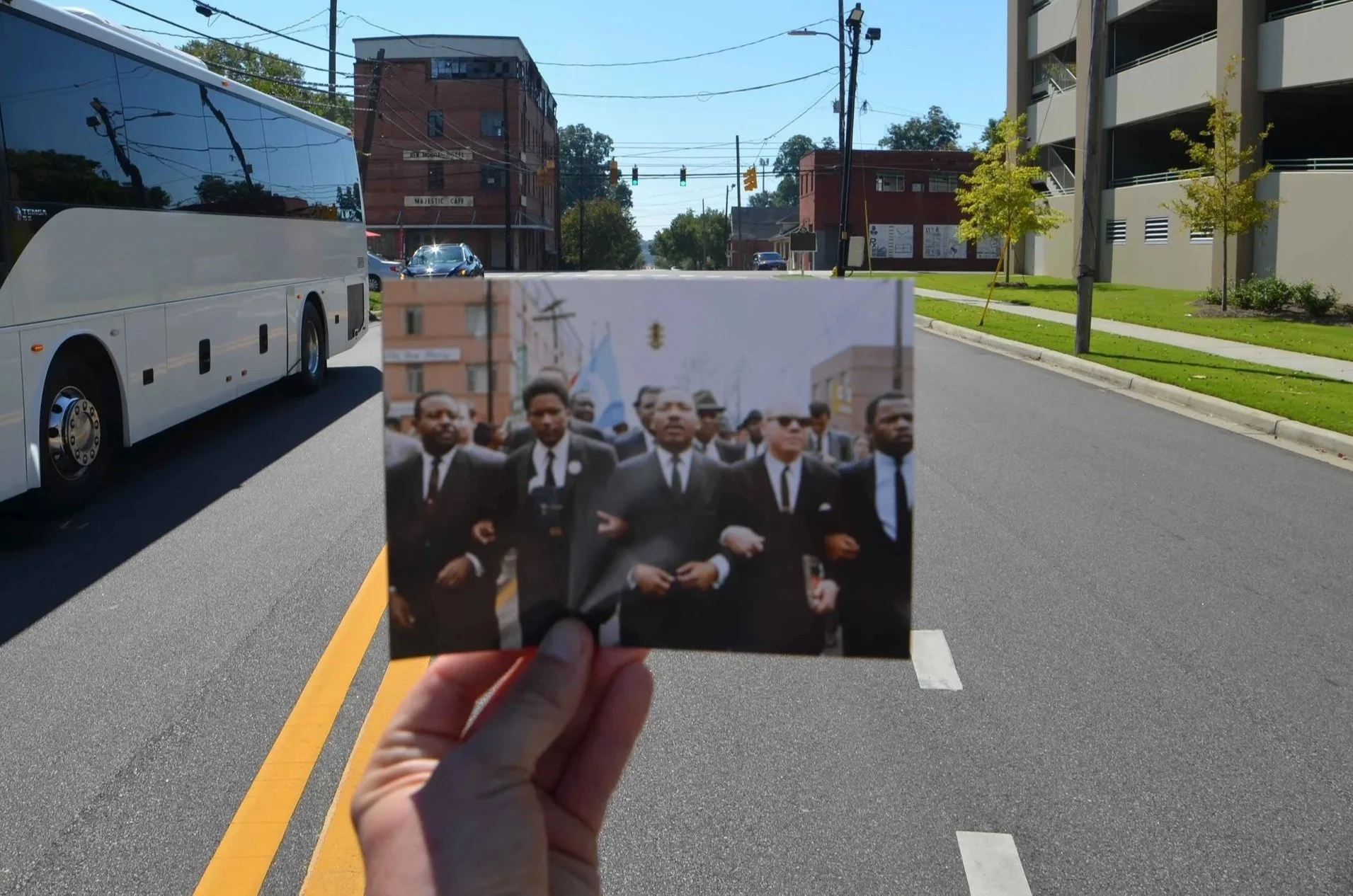
Widen the Circle’s Fellowship Network traveled to Alabama, Mississippi, and Tennessee to explore remembrance and memory in key areas of the American South. The goal was to see firsthand some of the most creative remembrance and memory projects in the United States, to talk firsthand with the people responsible for them, and to learn more about strategies to counter the forces that would alter or erase memory of oppression and hate. Participants were all members of our Fellowship and included both American and German remembrance activists.
Widen the Circle Executive Director Joel Obermayer shared his thoughts during the trip in the form of these letters.
Alabama
I’m writing to you from Montgomery, Alabama, home to some of the most innovative memory work occurring in the United States today.
I’m here with 23 members of the Widen the Circle Fellowship. This is an exciting time for all of us; while all of the fellows have participated in our Berlin-based fellowship project, this is the first time we have gathered in the U.S. to travel and learn together.
We’re at the beginning of an eight-day exploration of this important work here and across the deep South. We’ll see it firsthand, speak directly with the people responsible, and discuss it in depth.
Montgomery was the first capital of the Confederacy, and it is full of monuments glorifying that time and the leaders who fought to maintain slavery. On the other hand, yesterday we visited the Freedom Monument Sculpture Park, which features a wall listing more than 120,000 surnames taken from the 1870 census.
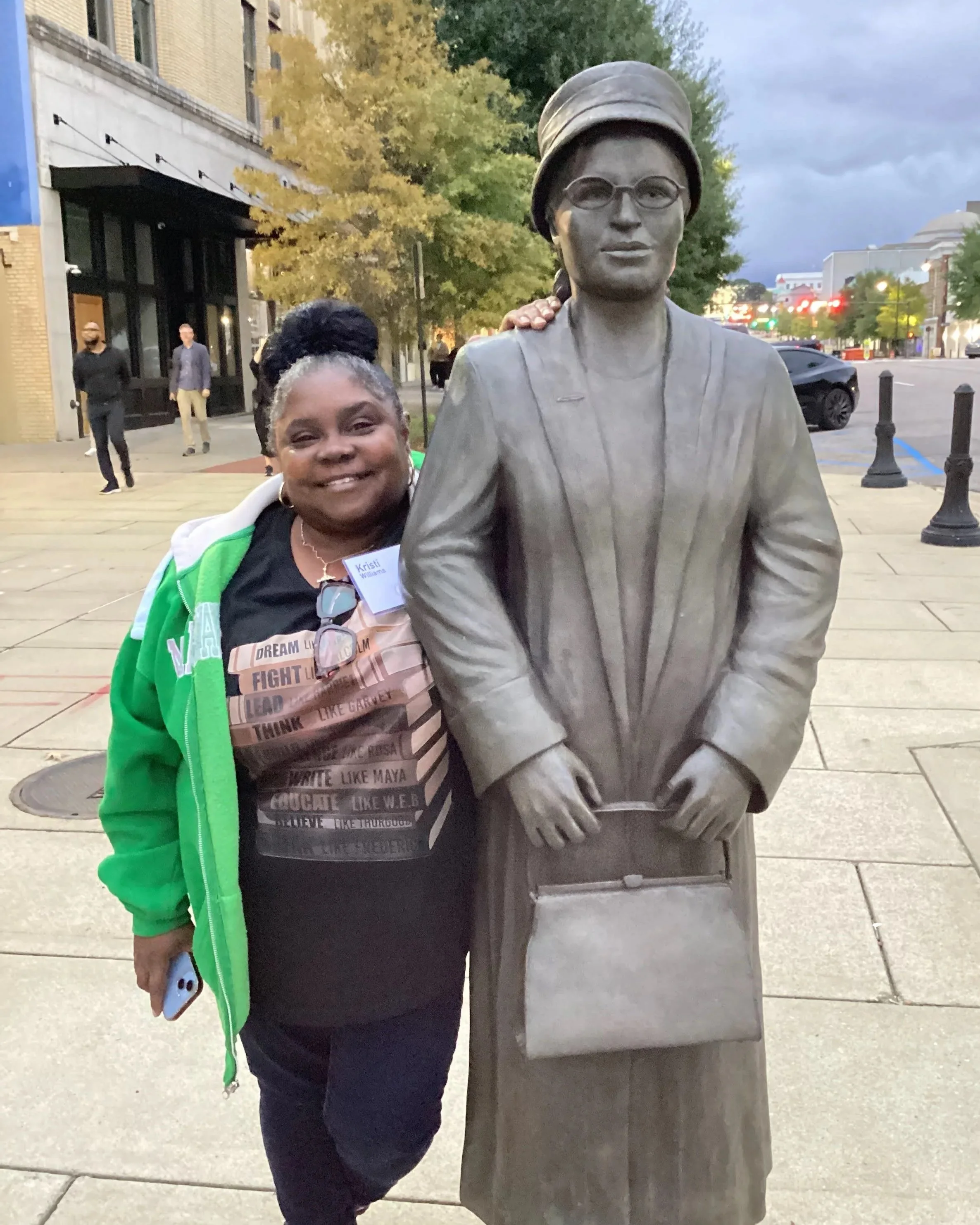
Widen the Circle Fellow Kristi Williams, founder of Black History Saturdays, and a statue of Rosa Parks
This was the first census after the end of the Civil War and the first time that formerly enslaved people could choose their own name. This wall creates such a visceral feeling, made more powerful for us when one of the fellows found her own family names inscribed there.
We’re taking this journey because our fellows asked for it. Most are covering their own way, and several who live in the region are hosting the rest of us and sharing their work in the places where it happens.
Why now? Because we are in the middle of a war on memory. In both the U.S. and Germany, remembrance is under pressure from political attacks, defunding, and efforts to erase or distort difficult histories. And distorting someone's history is never only about the past. It's a way of pushing people aside, telling them they don't count. A country that can't be honest about its past has a hard time keeping its promises in the present.
Remembrance activists confront these trends every day. And too many are doing it alone. This week is about changing that: learning from each other, building real relationships, and starting to form a network that can push back against the war on memory.
Montgomery is a fitting place to begin. It was a center of the slave trade, a capital of the Confederacy, and the place where the bus boycott helped launch the modern civil rights movement.
Over the next several days we'll move on to Selma, and then the Mississippi Delta and Memphis. I'll keep you posted along the way.
Best,
Joel
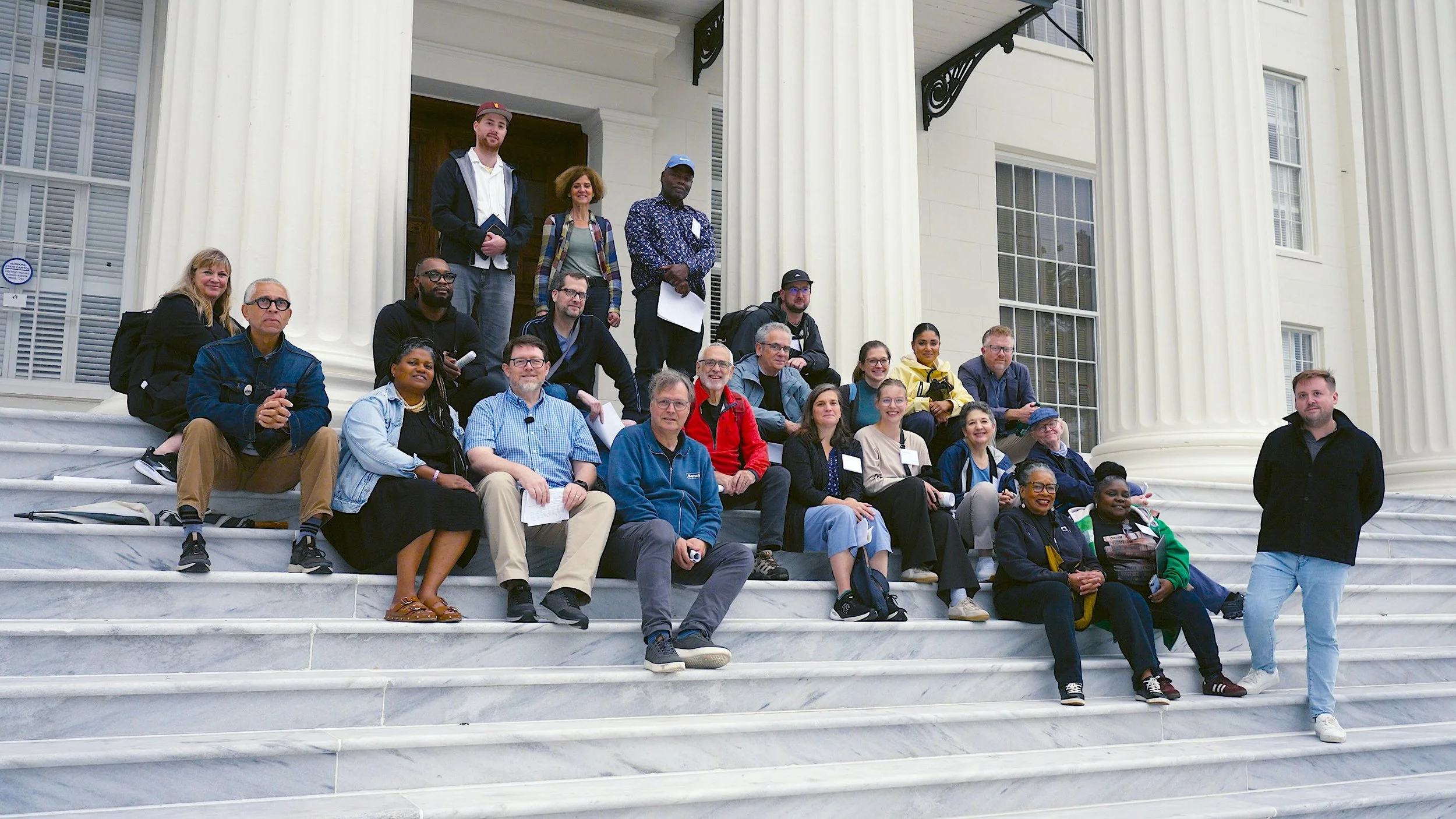
On the steps of the Alabama State Capitol building in Montgomery
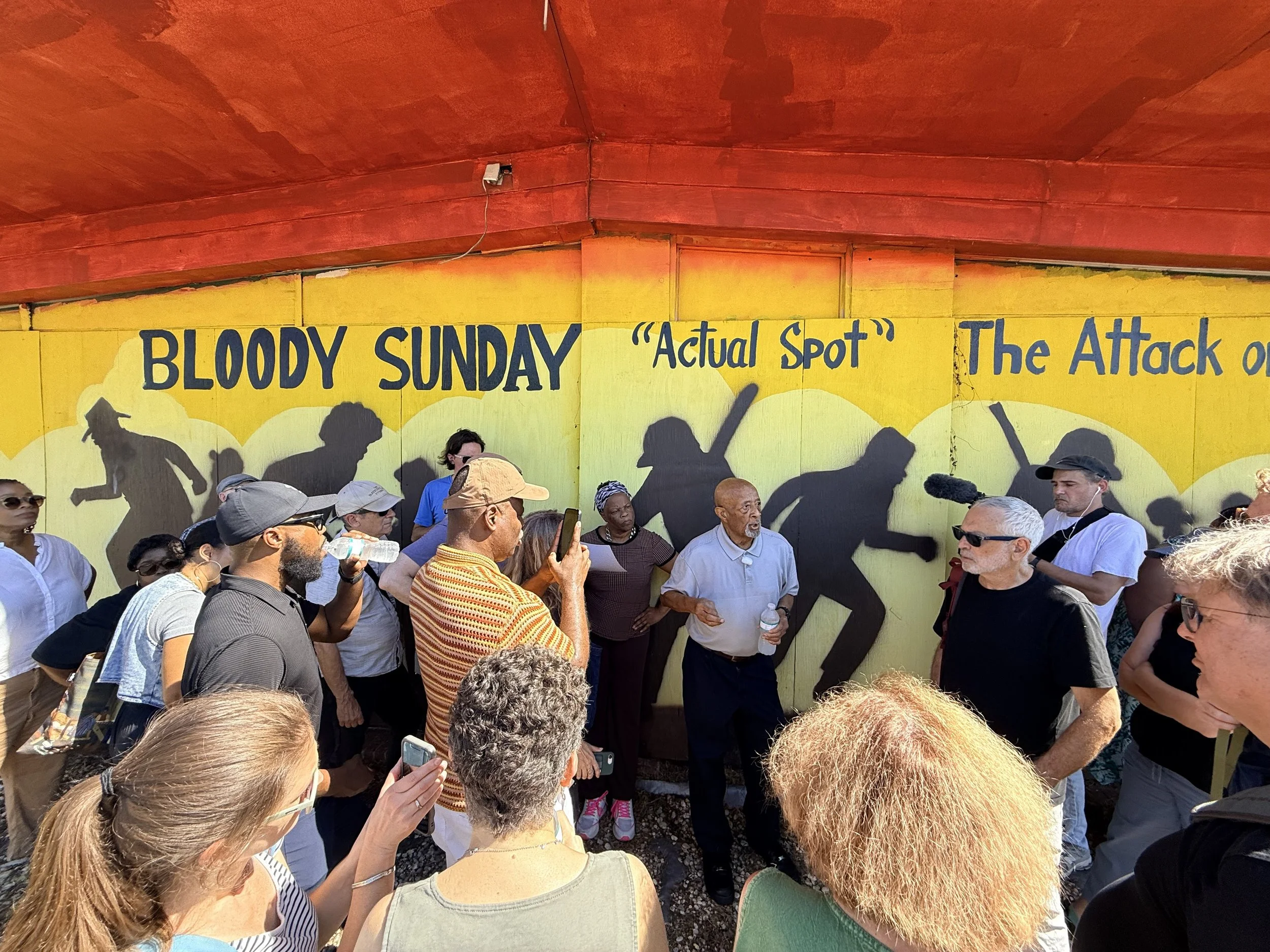
In Selma with Charles Mauldin (center), a participant in the 1965 Selma to Montgomery civil rights march. The marchers were brutally attacked as they crossed the Edmund Pettus Bridge in Selma.
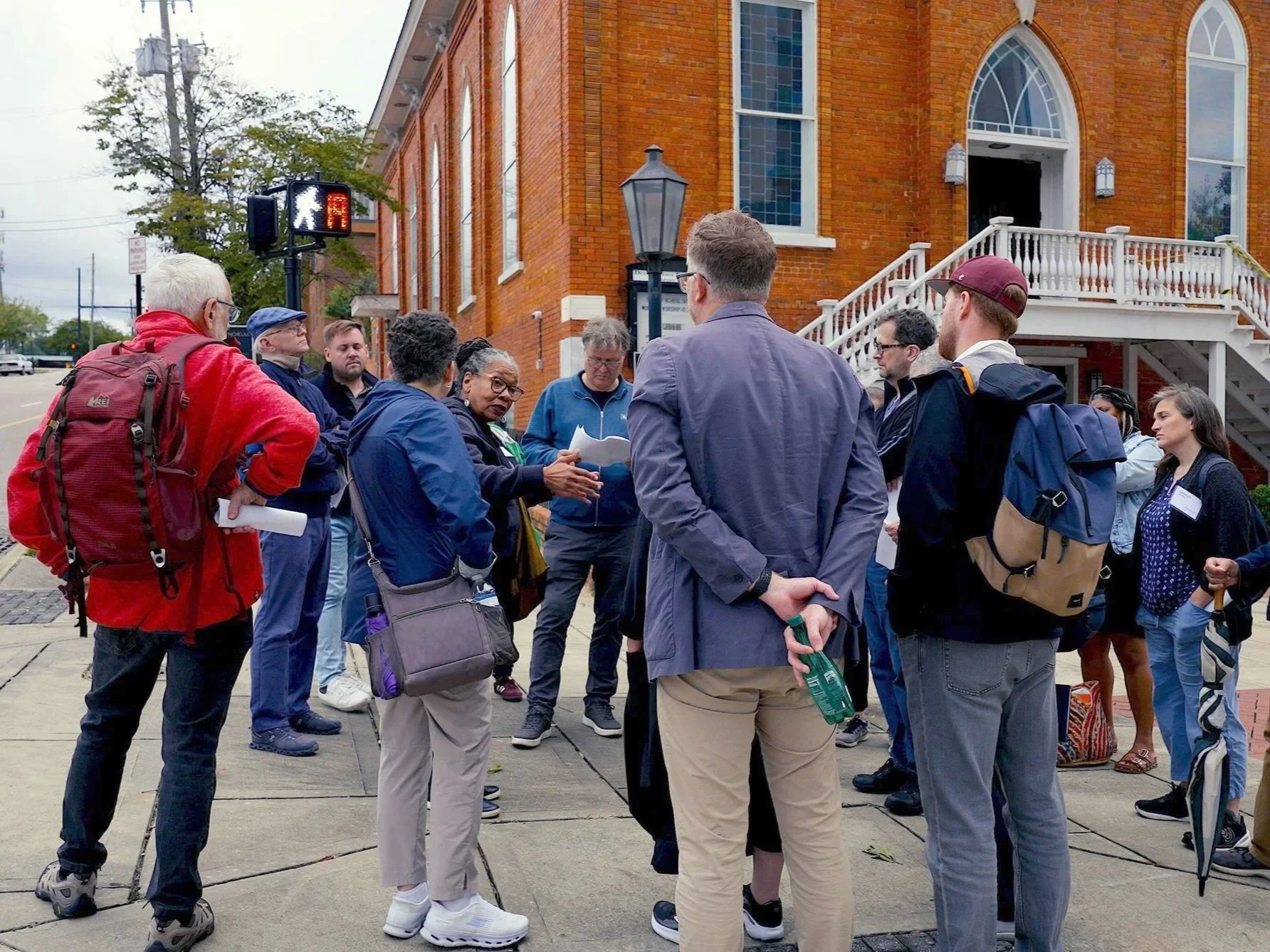
At the Dexter Avenue King Memorial Baptist Church, where Dr. Martin Luther King Jr. served as pastor from 1954–1960
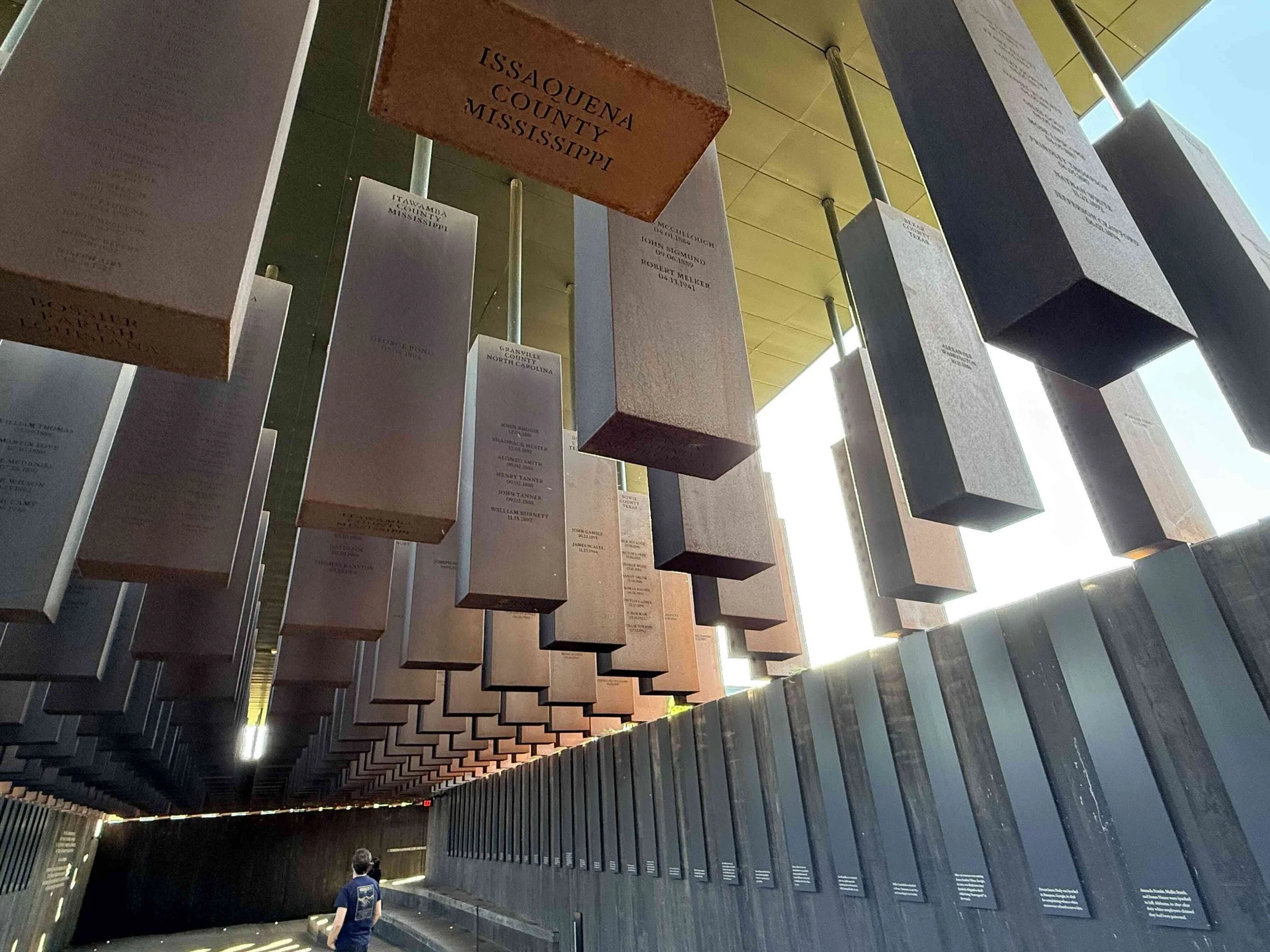
The Memorial for Peace and Justice in Montgomery. The columns each represent a county in the U.S. where a racial terror lynching has taken place. Each column lists the known victims in that county.
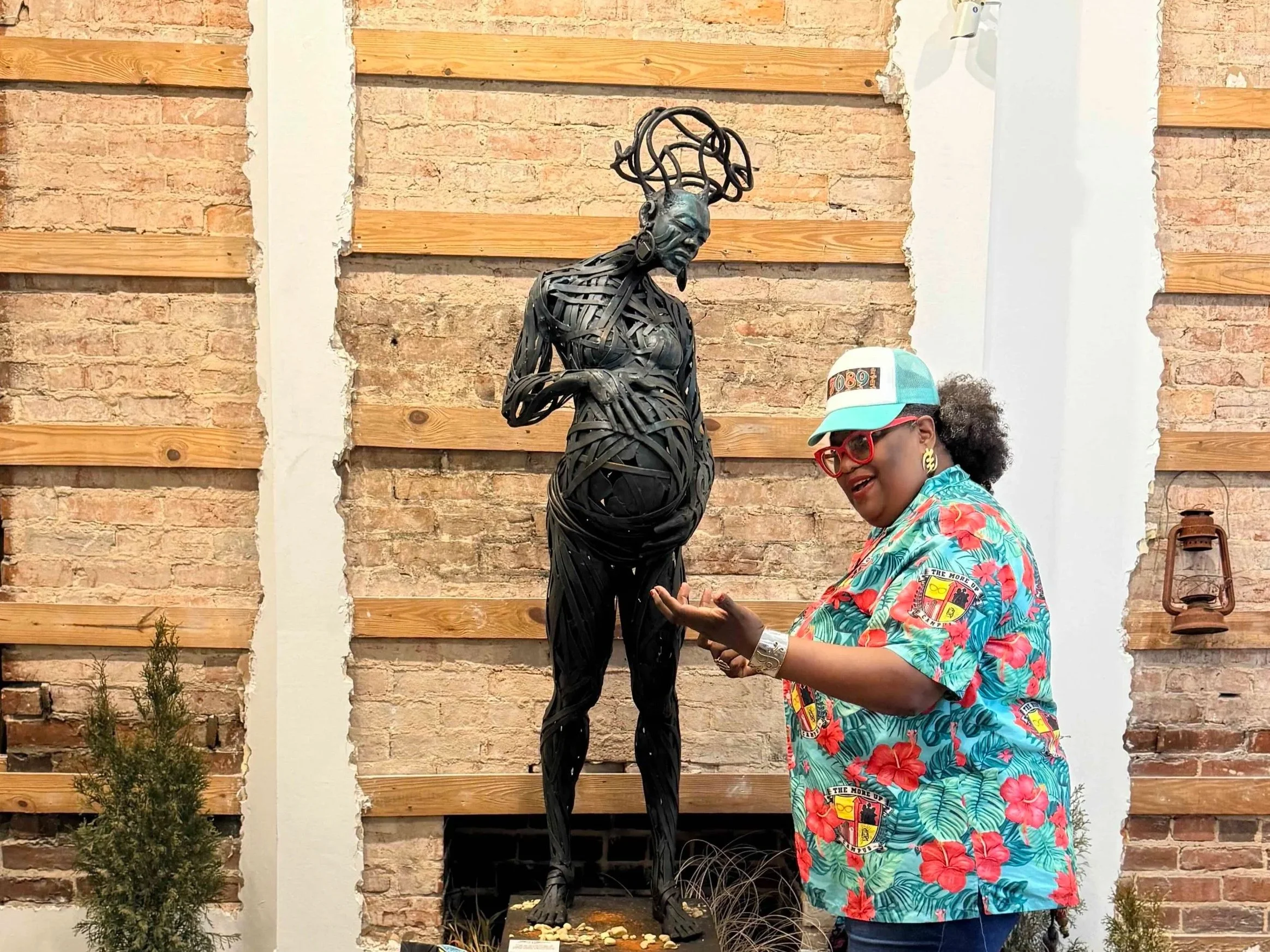
Artist Michelle Browder created the powerful Mothers of Gynecology museum and monument, dedicated to three enslaved women who endured horrifying experiments in the name of “research” in the 1840s.
Mississippi
The roads in the Mississippi Delta thread along flat, dusty fields, some with cotton ready to harvest, others still brown, broken up by stands of trees. Dust rises in the distance. There isn’t a cloud in the sky.
We have been driving through this landscape for the last two days, moving from site to site.
I’m traveling in the Deep South with more than 20 Widen the Circle fellows, remembrance activists from the United States and Germany who first came together in our Berlin Fellowship program. We are gathering in the U.S. for the first time, to see important remembrance work where it is happening, to learn from each other, and to launch a network focused on the U.S.
After several days in Alabama, we came to Mississippi for a deep dive into a single story: the kidnapping, torture, and murder of Emmett Till, a 14-year-old boy from Chicago, in 1955. Till was visiting relatives in Mississippi, and his murder and the injustice that followed became an important catalyst for the Civil Rights Movement.
Our guides were Fellows who know this ground better than anyone: Patrick Weems, who runs the Emmett Till Interpretive Center; historian Dave Tell; and Karlos Hill, who has written a graphic history about Till’s life and murder. Jessie Jaynes-Diming of the Interpretive Center guided us as well.
Why spend two days on one story? Because we are in the middle of a war on memory, and this story shows how memory is made and how it is unmade. Much of what we saw illustrates the ongoing fight over whether this history gets told at all.
We started in Sumner, Mississippi, at the Tallahatchie County Courthouse. The courtroom has been carefully restored to look the way it did in September 1955 when, after a five-day trial, an all-white jury acquitted two white men of murdering Emmett. After they were acquitted and so couldn’t be retried, the men sold their story to a national magazine and confessed to the murder.
Across from the courthouse, the Interpretive Center tells the full history. In 2007 residents gathered on the courthouse steps to apologize to the Till family, the first time anyone had done so. Fittingly, this took place at a building where justice failed and where people across the street are working to tell the truth about it.
The courthouse is now part of a National Monument. On its front door is a notice from the U.S. Department of the Interior, posted in support of an executive order from the current administration. It invites visitors to report “any signs or other information that are negative about either past or living Americans or that fail to emphasize the beauty, grandeur, and abundance of landscapes and other natural features.”
The River
Thursday began with Karlos Hill. Most of what the world knows about Emmett Till, he told us, is how he died. His mother, Mamie Till-Mobley, insisted on an open casket. “Let the world see what they’ve done to my boy,” she said.
That decision changed the country. A picture of Emmett’s brutalized face was published in hundreds of newspapers and provoked outrage. Just a few months later, in Montgomery, Alabama, Rosa Parks refused to give up her seat.
But the open casket also meant that people saw the murder and not the boy. Karlos works to show Emmett as the kid he was: a jokester, a boy everyone knew by his nickname, Bobo.
From there we went to the Tallahatchie River, where Emmett’s body was found three days after he was taken. His killers had weighted him with a cotton gin fan. The river gave him up anyway.
The road to the exact spot had washed out, so we stopped on a bridge overlooking the water and held a minute of silence. No clouds. A light wind. The water below that had held him.
Dave told us about the markers at the landing. The first was stolen and thrown into the river within months of being installed. The second was shot so many times, 317 bullet holes, that it was finally taken down; it is now in the Smithsonian Institution. The third lasted 35 days before it too was shot. The one there now, installed in 2019, cost $12,000 and weighs 500 pounds. In Dave’s words, it is “to my knowledge, the only bulletproof roadside marker in all of America.”
Next we drove to Money, Mississippi, and what is left of Bryant’s Grocery. Emmett came here with his cousins to buy candy. He whistled. The shopkeeper, Carolyn Bryant, falsely accused him of grabbing her. Soon afterward her husband, his half brother, and likely a few others abducted him.
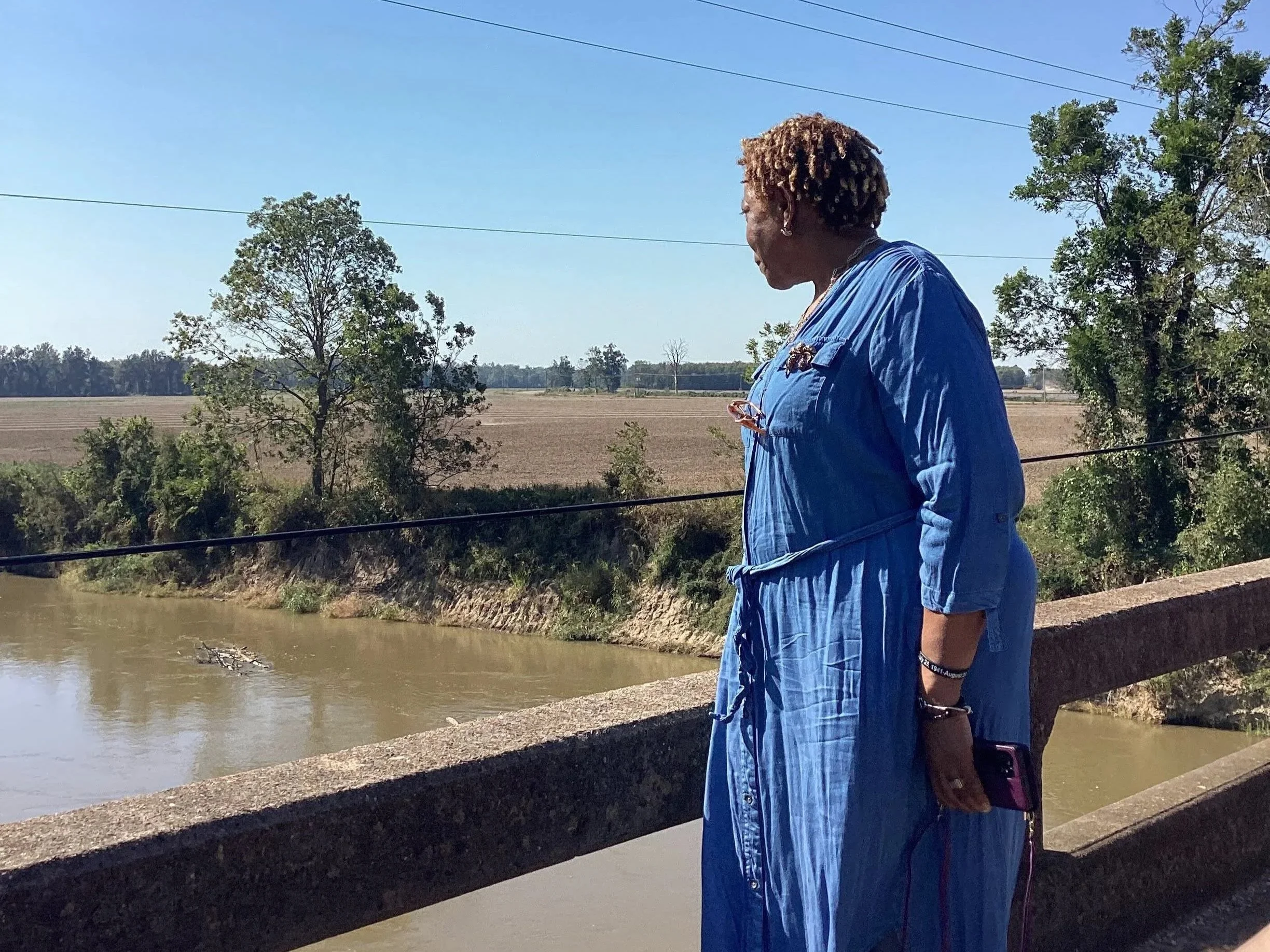
At the river where Emmett Till’s body was found
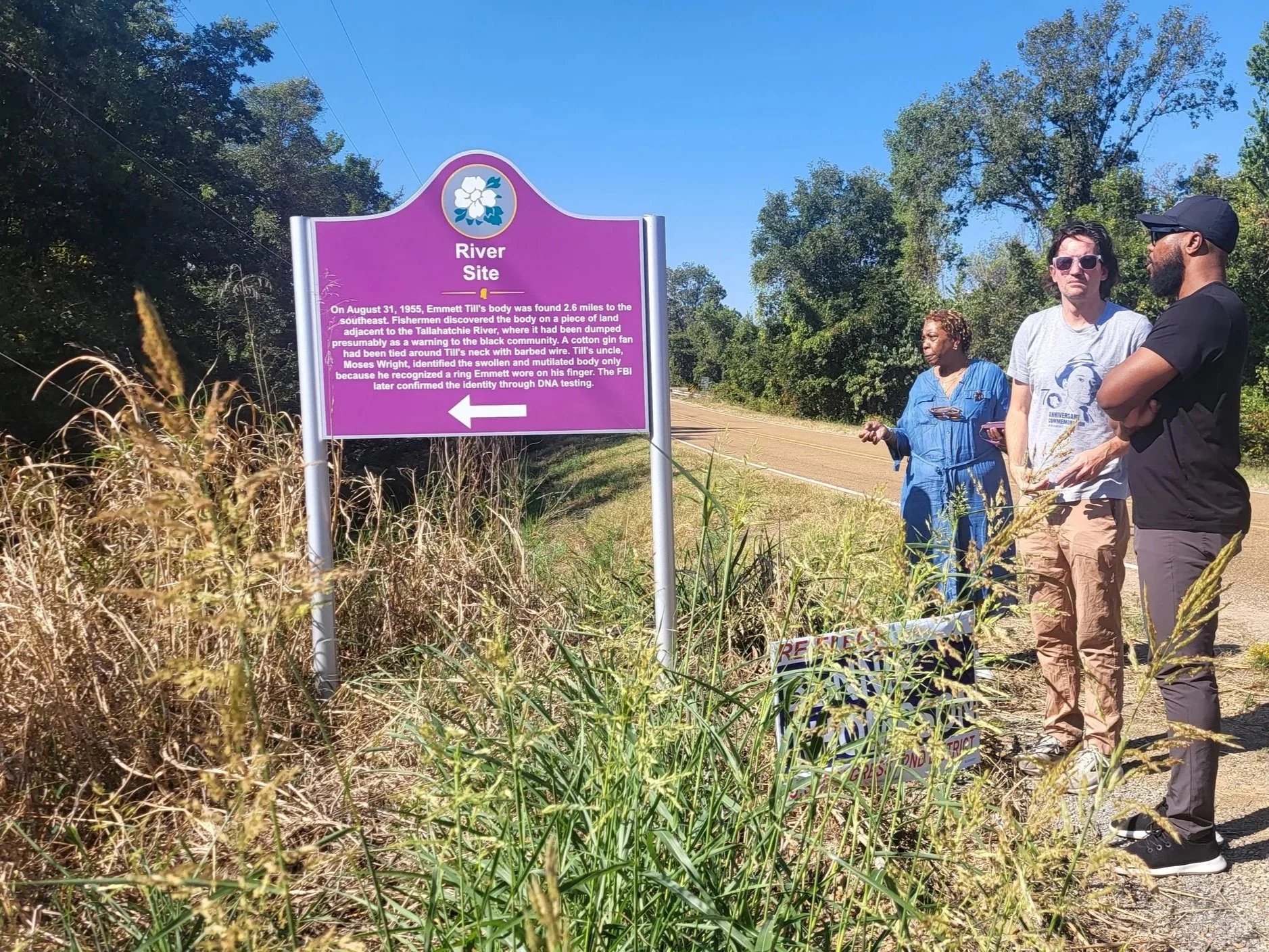
The sign marking the river site has been vandalized and even riddled with bullets many times over the years
Something Uplifting
We drove on to Drew to have lunch with Gloria Dickerson at her nonprofit, We2gether Creating Change. A story like this can leave you with only grief and anger. Gloria gave us something else, too. Hope.
In 1965, when she was 12, Gloria and six of her siblings signed up to attend Drew’s all-white school under a “freedom of choice” plan that said Black families could choose. Her family worked as sharecroppers. When the landowner told her father to remove the children from the school, her mother answered: “I’m not taking my kids out of school.” Within days, shots were fired into the house. Credit at the store was cut off. The family’s garden was plowed up, and they were told to leave. The Quakers of the American Friends Service Committee stepped in to help.
For five years the Dickerson children were the only Black students in that school, and they stayed. Gloria went on to college and a career in philanthropy, then came home to Drew to do something for the young people there: Saturday classes at an academy named for Emmett Till, and freedom markers that tell the town’s own history. She tells her students: “My family was determined that we were going to overcome that poverty. And we did. And so I know you can do it, too.”
The Barn
Our next stop was one I’d been thinking about for years — the barn where the murder occurred. Patrick first told me about it in 2023, before the Interpretive Center owned it. At the time it was an open question whether the barn would be preserved at all. Since then I’d read Wright Thompson’s book about this place, "The Barn," and it had grown very large in my thoughts. I felt something like dread going in. I also knew my path needed to bring me there.
For nearly half a century the barn was written out of the story, left off the maps of the crime. This distortion was purposeful; it allowed the two named killers to protect many other people who were involved in the murder.
The Interpretive Center bought the barn late last year. Now there is a privacy fence around it but no signs and no exhibits. They are still working out how visitors should behave here and what the site should become.
We began by walking the route Willie Reed would have walked. Reed lived nearby and heard what happened that night. He testified at the trial, knowing it could cost him his life. He immediately fled Mississippi, changed his name, and told almost no one for decades.
Many other people in this area heard what was happening in that barn. Most remained silent. A few, like Reed, spoke up. As Patrick put it: “There are many people [like Reed] who sacrificed so much also that America would know what happened to Emmett Till.”
We walked the last stretch mostly in silence. A bird now and then. The sound of feet on gravel. Gray, weathered wood. If you know the story, you can feel it here, looking at the barn, looking at the place inside where it happened, or just walking around the side and seeing the fields in the distance. It’s hard not to imagine the screaming of a 14-year-old boy.
People in our group reacted in different ways, often with grief. For several of the parents among us, grief turned to rage, at the people who did this and at a system that allowed it to happen again and again to other Emmett Tills.
The Rev. Willie Williams, who grew up in the area and chairs the Interpretive Center’s board, spoke to us at the barn. The first public recognition of this history in Mississippi, he reminded us, came nearly 50 years after the murder. “It was 50 years of silence,” he said. And then: “It’s OK to hurt. Also, it’s OK to heal.”
I touched the side of the barn. So did Kristi Williams, a Fellow from Tulsa, Oklahoma. We both wanted to touch the wood, and neither of us wanted to do it alone.
I thought about a 14-year-old boy who played checkers on a porch, walked in for candy, and whistled. The kind of thing boys do. And I thought about his mother. I’m also a parent. And the thing a parent most wants is to protect their child. She couldn’t.
This place was erased for decades. Now it is being written back in by people like Patrick, Dave, and Gloria. That’s the work we came here to learn from, and to join.
From here we go to Memphis.
I’ll write again soon.
Best,
Joel
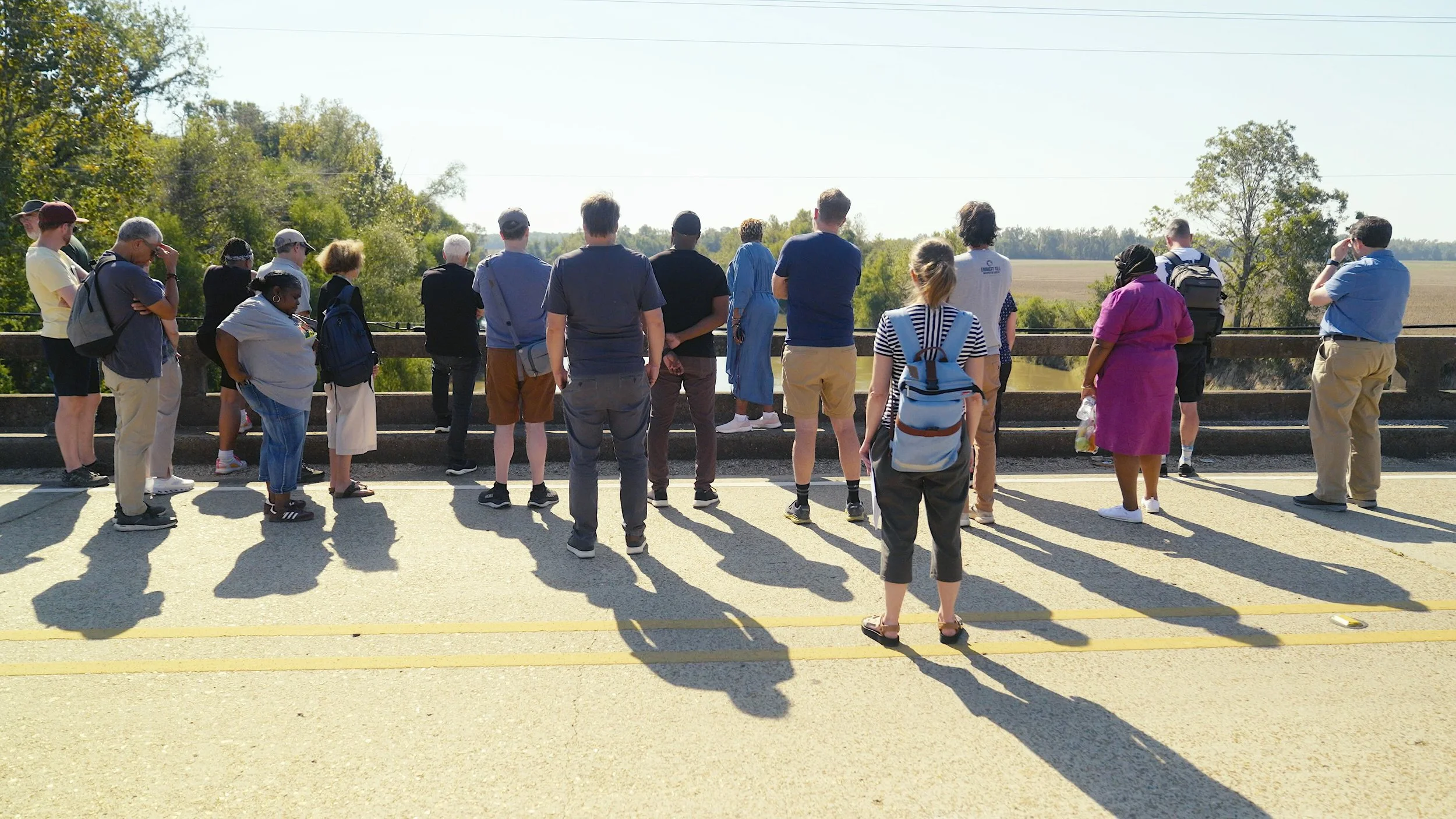
Together on the bridge overlooking the river where Emmett Till’s body was discovered
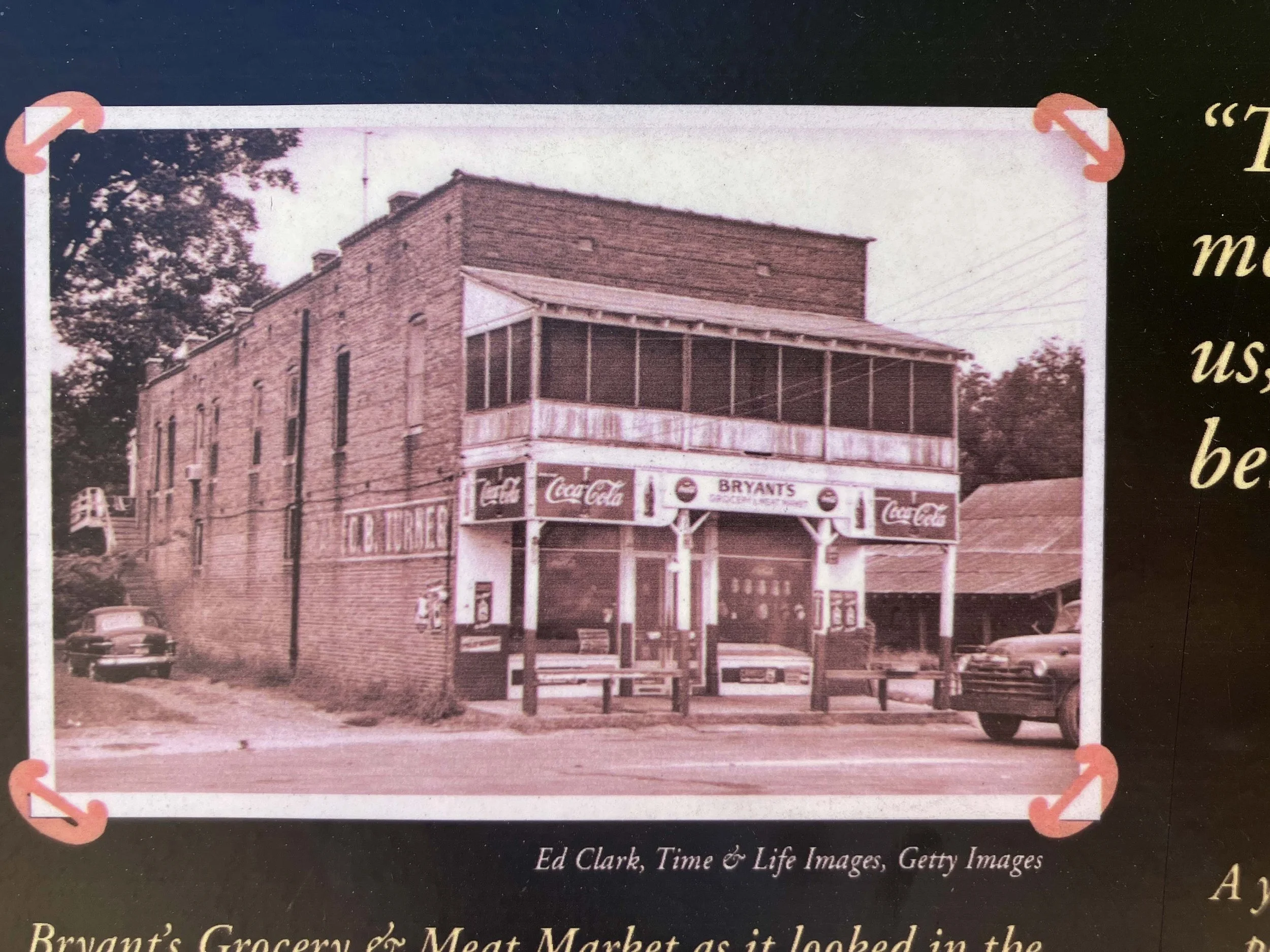
Bryant’s Grocery as it looked in the 1950s
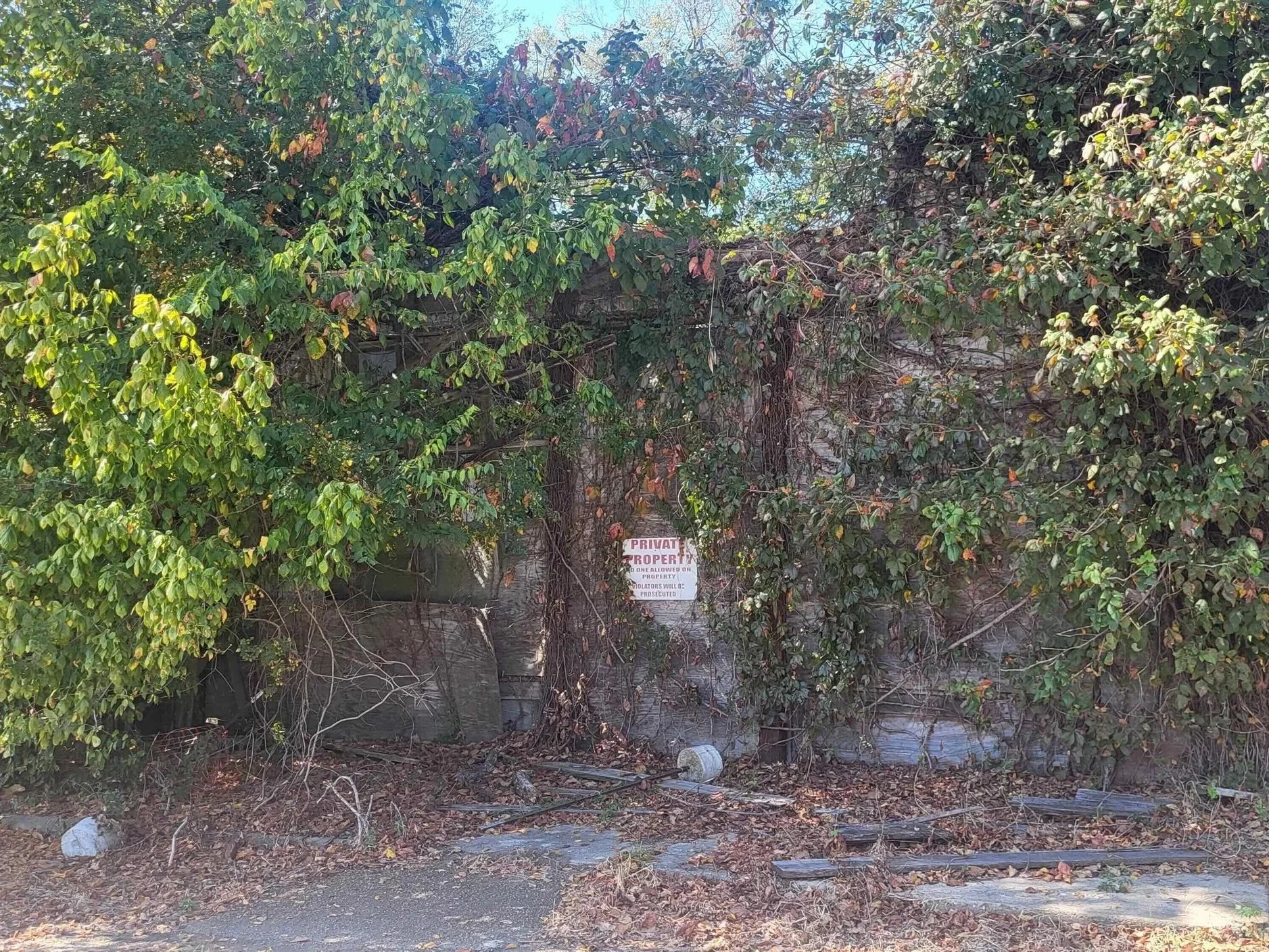
The Bryant’s Grocery site now
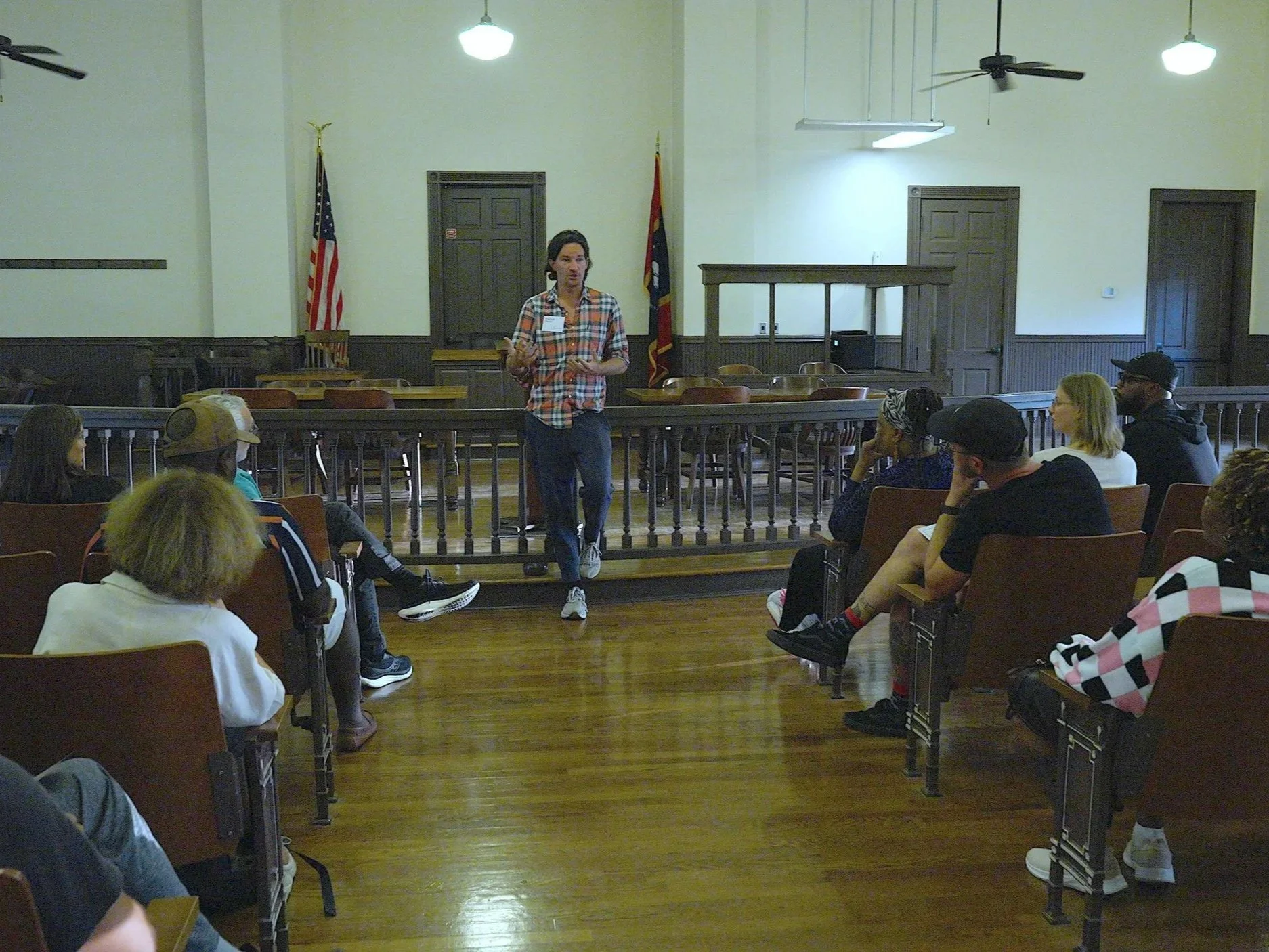
Patrick Weems speaks to us at the courthouse where the trial took place
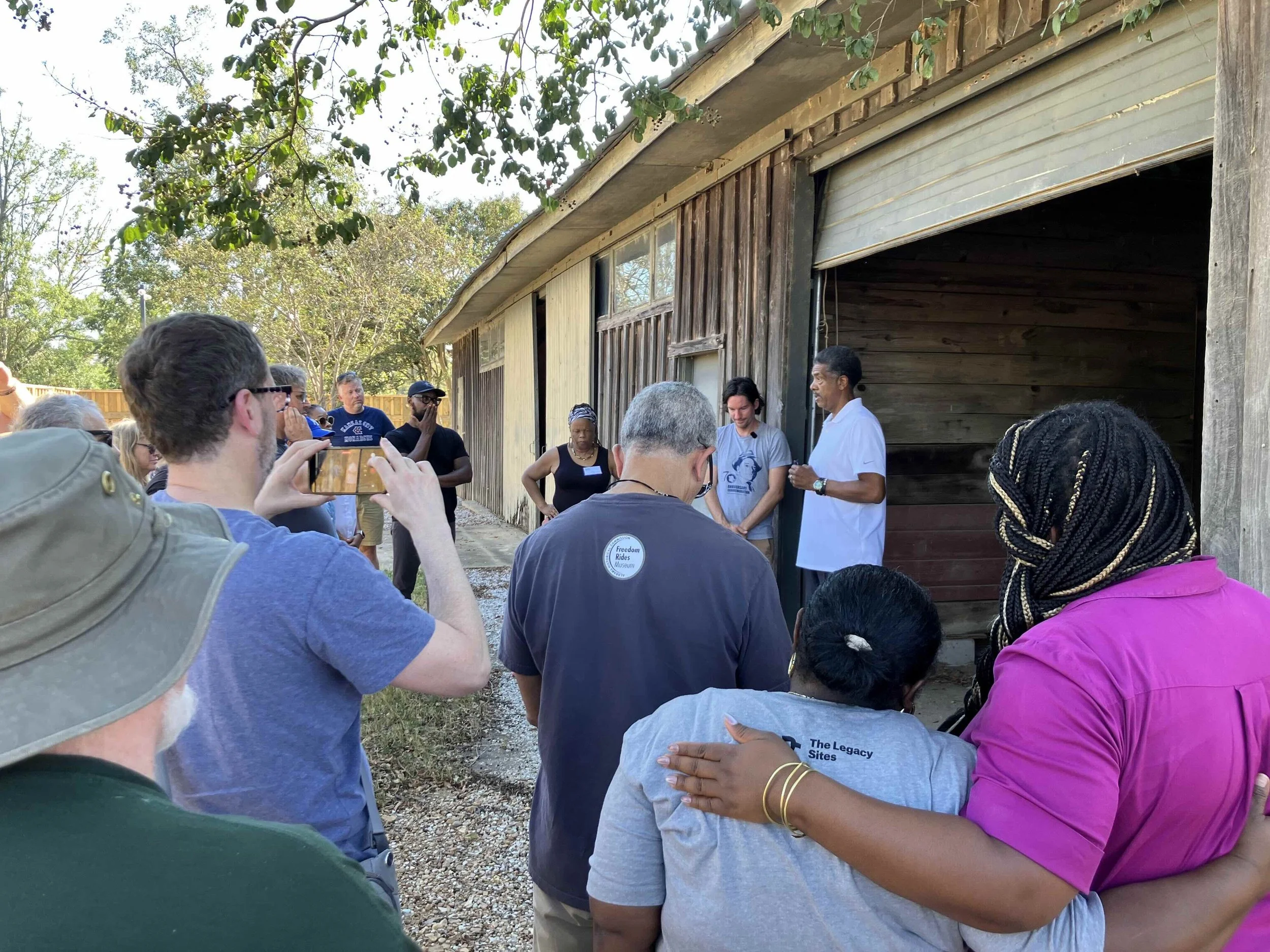
At the barn where Emmett Till was murdered
Tennessee
Last Saturday afternoon, I stood in front of a powerful monument in Memphis. It’s a large outdoor sculpture consisting of just four words: I AM A MAN.
Those words were printed on signs carried by Black sanitation workers in Memphis in 1968. The workers walked off the job after two of their coworkers were crushed to death by a malfunctioning garbage truck. They wanted safer conditions, but they also wanted a living wage and a union. Many relied on public assistance to get by. They weren’t allowed to ride in the cab, whatever the weather, and a sick day could get them fired. The mayor refused to negotiate.
Their headquarters was Clayborn Temple, a historic church a few steps from where I stood. Hundreds of strikers gathered there every day as they prepared to protest, and the signs were printed in its basement.
The strike drew Martin Luther King Jr. to Memphis. He marched with the workers. A week later and the day after he delivered his acclaimed “I have been to the mountaintop” sermon in support of the workers, he was assassinated.
I visited Memphis with more than 20 Widen the Circle Fellows, remembrance activists from the United States and Germany who first came together as part of our Berlin Fellowship. For more than a week we’d been in the Deep South. This was our first gathering in the U.S. to see remembrance work where it happens, learn from each other, and begin building a network here focused on preserving memory, fighting erasure, and countering prejudice and hate.
I didn’t know what it would be like to stand so close to Clayborn Temple. An arson fire in April 2025 burned Clayborn nearly to the ground. Only some walls still stand. I’d known about the fire, but I couldn’t take my eyes off the skeletal remains. It felt as if the disaster were happening right then.
Earlier in Memphis our hosts at Facing History and Ourselves had shown us another way to deal with tough history: by using it to teach. Facing History & Ourselves works with teachers on topics of memory and remembrance and how they relate to our world today.
Two of our Fellows, Jocelyn Stanton and Steve Becton, hold senior positions at Facing History. Their method asks students to use their head, their heart, and their conscience: What do we know? What do we feel? What is right? Instead of explaining the method to us, they had us live it.
We started with a poem by Nobel Prize-winning Polish poet Wisława Szymborska called “The End and the Beginning.” It’s about the exhausting, unglamorous work of rebuilding a society after devastation. We identified words and lines that struck us, and then spoke them aloud to fill the room with the language.
Next came a “found poem” exercise, in which we took writings on injustice by W. E. B. Du Bois and Mamie Till-Mobley (mother of Emmett Till) and manipulated the language to create something akin to poetry.
For us, this was the pattern of Memphis. In Alabama and Mississippi we had looked and listened. Here we were asked what to do with that information. And in truth, that is what the Fellows wanted to focus on.
We came on this trip with several goals. They included deep learning and community-building among Fellows who didn’t all know each other, and catalyzing ways for Fellows to move forward in their work. Amazingly, all of these were happening by the second day. Our other goal was to mobilize this group to help us build a network of remembrance activists focused on the U.S.
During our last evening together, we sat down to talk about how to build that network. We brainstormed ways such a network could be active: sharing information to keep remembrance activists informed, gathering them to problem-solve and connect with one another, and readying them to mobilize when their work is threatened.
Then historian and Widen the Circle Fellow Dave Tell put it simply: “I know you’re talking about building a network. But really, you already have one. It’s right here. It’s already here.”
The Fellows know this journey was just the beginning. In the coming months, we’ll start turning the connections they made into something lasting: a network that can help remembrance activists across the country push back against the war on memory.
Thank you for following along with us. I hope you’ll be part of what comes next.
Best,
Joel
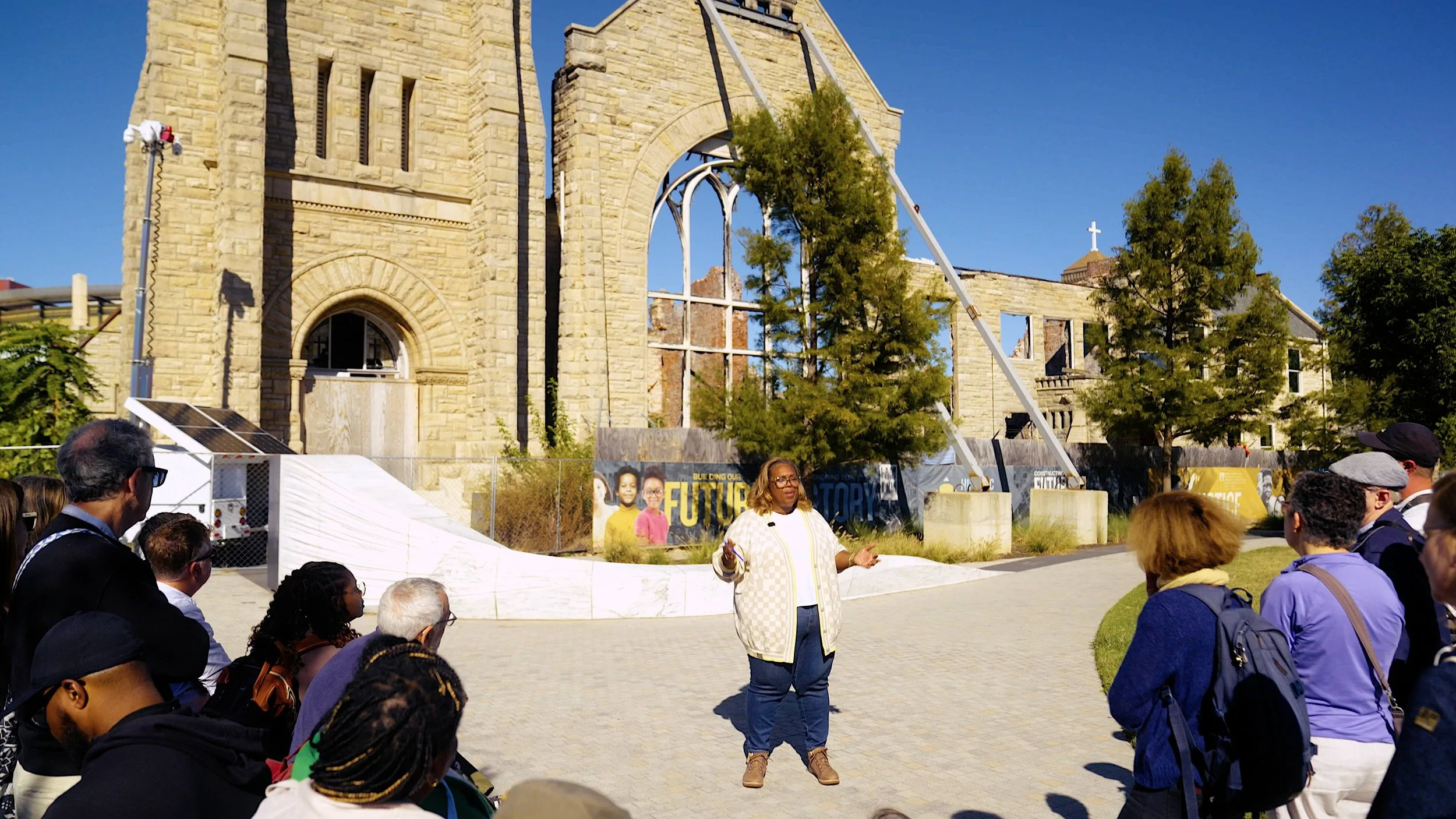
Anasa Troutman speaks to us about plans for Clayborn Temple, which suffered grave damage in an arson fire last year.