
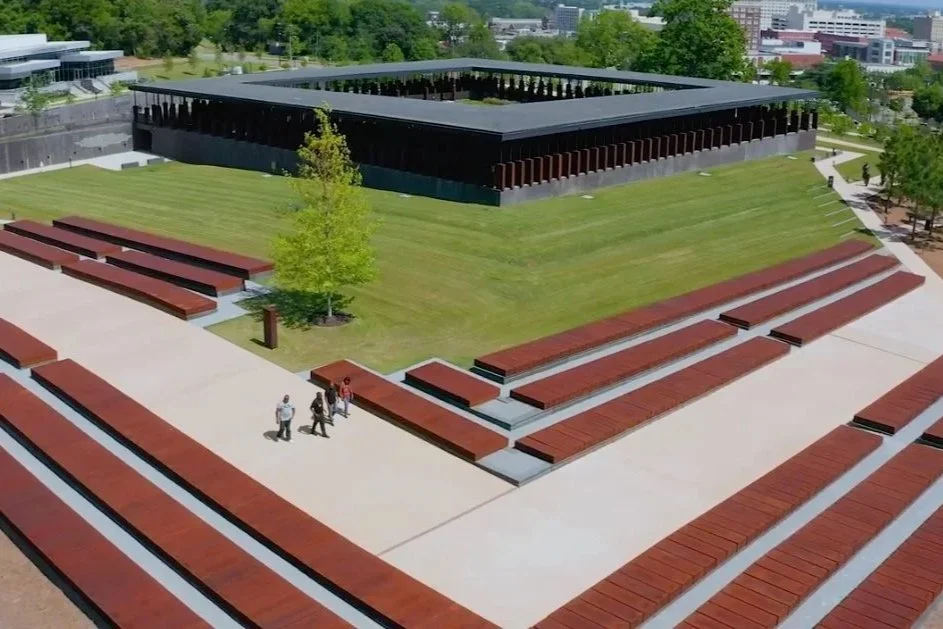
The National Memorial for Peace and Justice, Montgomery, Alabama
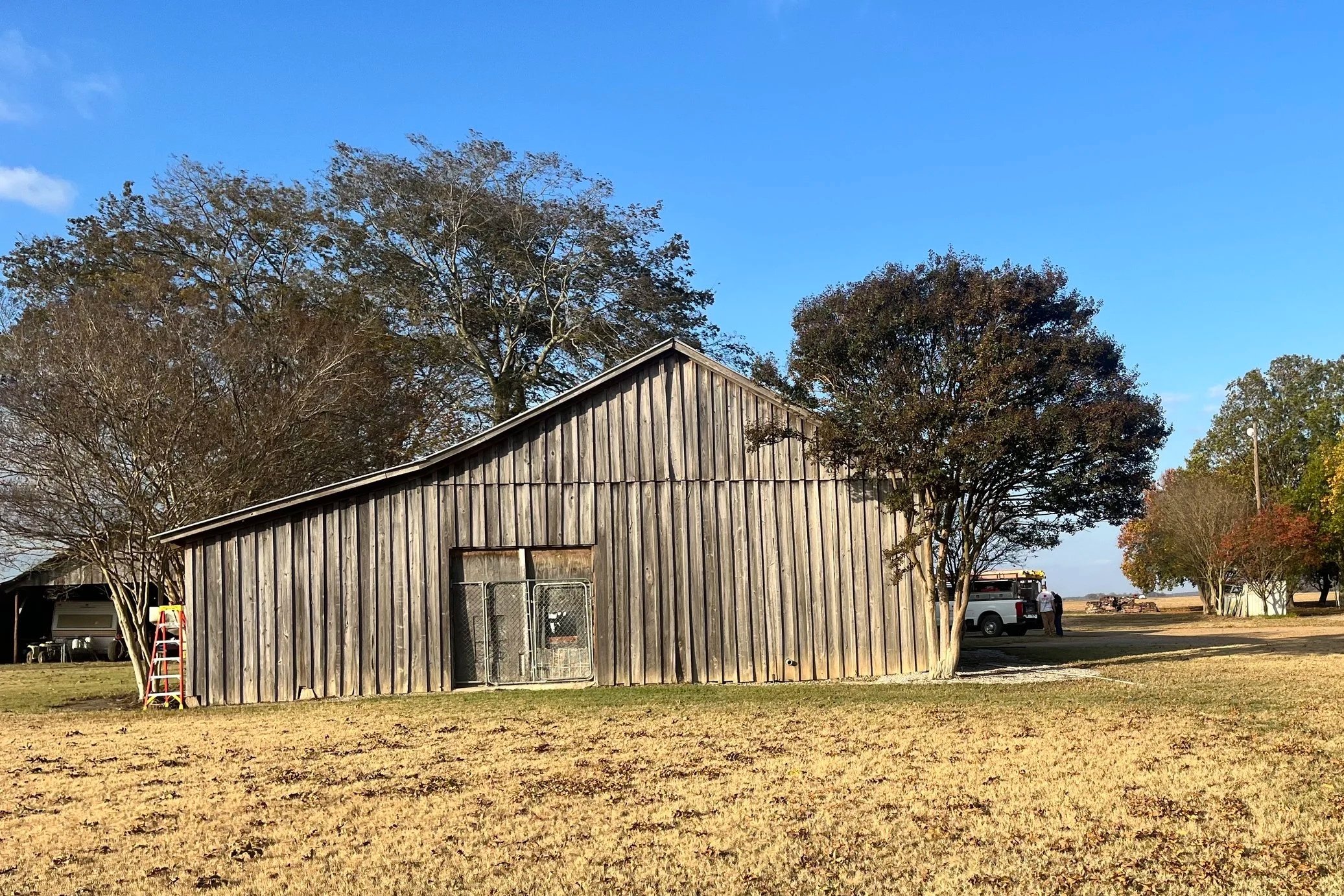
The barn where Emmett Till was murdered in Drew, Mississippi
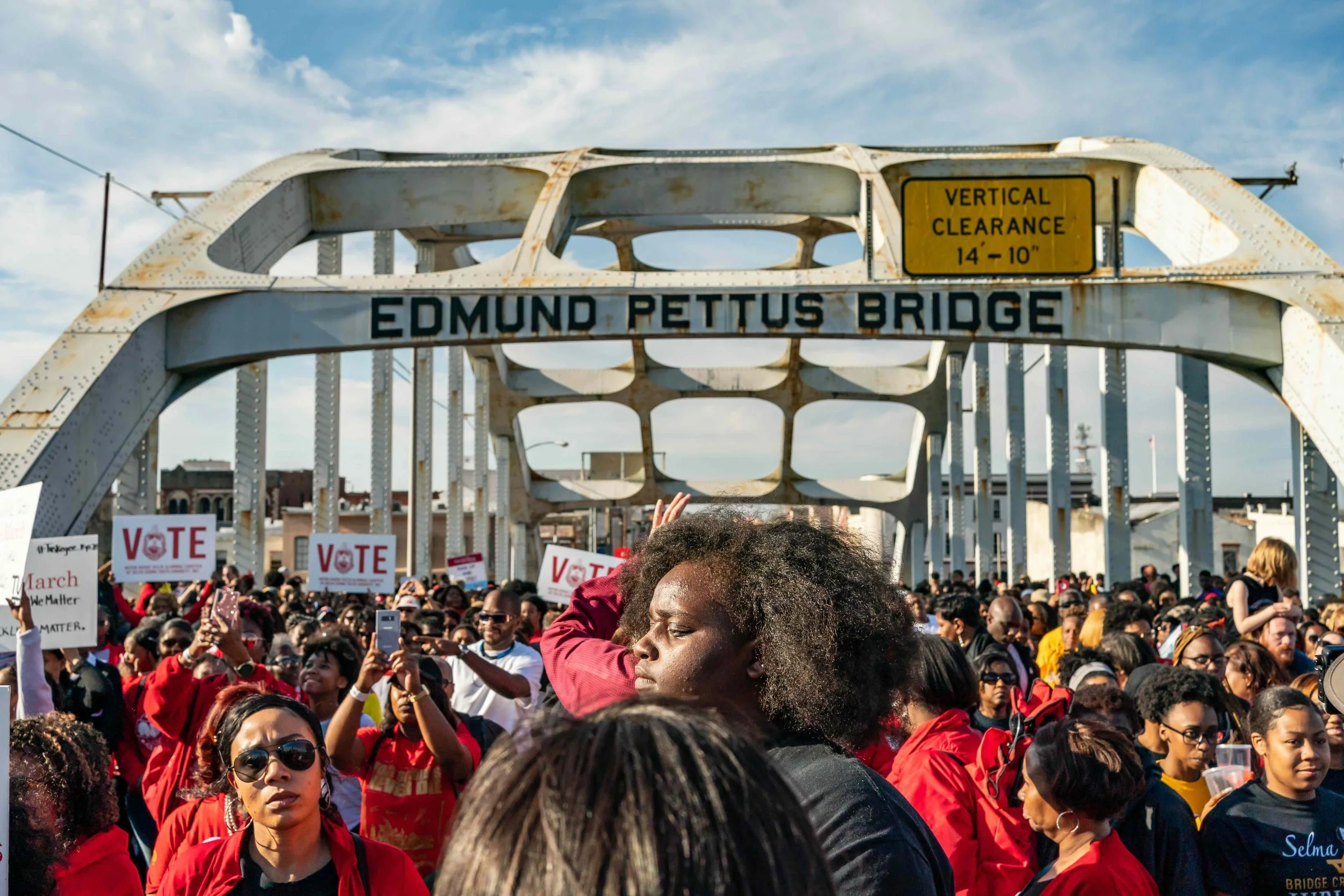
The Edmund Pettus Bridge, Selma, Alabama
Remembrance in the Deep South
A study trip for Widen the Circle Fellows examines questions about memory
Widen the Circle’s Network of Fellows gathers in Montgomery, Alabama, October 10 to begin an eight-day learning and study trip across three Southern states.
The group will visit well-known memorials and landmarks, such as the National Memorial for Peace and Justice, the Emmett Till Interpretive Center, and the National Civil Rights Museum. They will also visit many community-based sites of remembrance where history is being preserved. And they will speak directly with the people responsible for creating and managing these sites.
The 23 participants, remembrance activists from the United States and Germany, have all participated in Widen the Circle’s Berlin Fellowship, a yearlong program anchored by an eight-day immersive learning experience in Berlin. This is the first time the Fellows have gathered in the United States to learn and travel together.
This study trip to Alabama, Mississippi, and Tennessee builds on the shared learning that began in Berlin and continues our collective effort to sustain remembrance work at a time when historical truth is increasingly contested.
Who has agency to shape public memory? How is that agency recognized, sustained, or challenged by other stakeholders?
In both the U.S. and Germany, remembrance culture is under pressure—through political attacks, public resistance, defunding, and growing efforts to distort or erase difficult histories. Many remembrance activists work in isolation. This convening of the Fellowship creates time and space to reconnect, deepen trust, and think together about how public memory operates—and how it can be defended, renewed, and mobilized.
The group will examine shared questions such as:
Who has agency to shape public memory? How is that agency recognized, sustained, or challenged by other stakeholders?
How do grassroots and official forms of remembrance differ, and when do they support or undermine one another?
How can memory sites honor those most harmed by violence while still confronting those who have benefited from it?
When does remembrance contribute to justice—and when does it risk becoming symbolic?
How can memory move people from knowledge to witnessing, and from witnessing to responsibility, empathy and action?
We approach remembrance not as something fixed but as a living ecosystem. Memory is carried through personal testimony, community archives, monuments, museums, education, public ritual, art, music, foodways, and place—operating across personal, institutional, community, and state levels.
Memory can also reflect back to us information about ourselves and our contexts. It is often alive and sacred, helping us connect and make meaning of our landscapes, music, faith traditions, and everyday practices. It can be political, revealing how power operates in the present. It highlights our role as witnesses and the responsibilities we may have to the dead, to survivors, and to future generations.
And of course, remembrance work is never finished. Our trip together is both an act of memory, of legacy, and continuing to build the ecosystem together.