
“They left their marks behind.”
Ellen Grünwald searches for traces of a Jewish community, and looks to the future
by Julia Bosson
A coincidence led Ellen Grünwald to begin her research into the Jewish history of the town of Eberswalde. Perhaps it was even fate. When her doorbell rang one day in 2003, Grünwald was in the kitchen baking a cake for her son’s first birthday. A kindergarten teacher by profession, she was on parental leave. Otherwise, she might not have been home to answer.
When Grünwald opened the door, she encountered an elderly woman, elegantly put together, who spoke flawless German in an accent that sounded slightly foreign. The woman introduced herself as Lilli Kirsh and explained that her family used to live in this apartment in the 1930s. Grünwald, intrigued, let her in. As they chatted, it became clear that Kirsh had the address wrong; the building where she grew up had been destroyed in the war. She had rung Grünwald’s doorbell by mistake.
When Kirsh excused herself to leave, Grünwald followed an impulse. Still in her socks, she ran after Kirsh and asked for her contact information. That day would change their lives.
Eberswalde, a town of 40,000 residents about 48 kilometers (30 miles) northeast of Berlin, was once an important industrial center but declined after the collapse of the German Democratic Republic (East Germany). Like much of the state of Brandenburg, the community has struggled with right-wing extremism. One-third of the electorate voted for the far-right AfD party in the most recent federal elections.
And yet in the years before the Nazis came to power, Eberswalde was home to a thriving Jewish community. Today, residents and visitors can see the traces of this past in 69 stumbling block memorials, known as Stolpersteine; on the walls of the local bakery, which display a text honoring the Jewish family that once owned a business there; and in the newly restored cemetery, where the stones date to the 18th century.
“I noticed you can quickly be left out if you don’t conform. It influenced me to think about injustice and why people are discriminated against.”
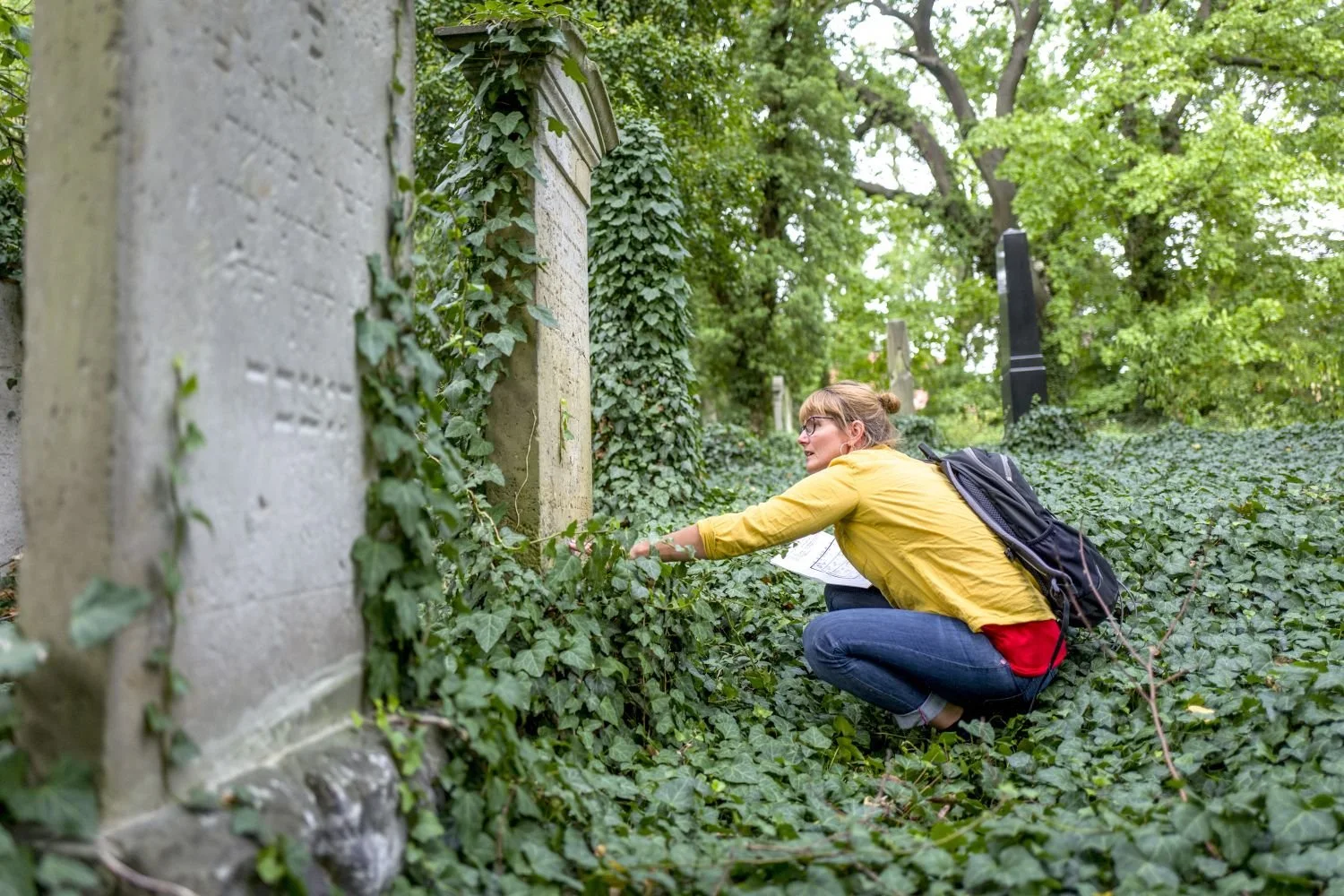

photo: Ulrich Wessollek
This is due in large part to the tireless dedication and devotion of Ellen Grünwald. She founded the initiative Al-Tishkach: Jewish Traces in Eberswalde (Al-Tishkach — Judische Spuren in Eberswalde) and has spent more than 20 years volunteering to bring Jewish history to light. In the process, she has activated the local community to build a vibrant remembrance culture, connecting residents and schoolchildren to survivors and descendants.
Grünwald’s encounter with Lilli Kirsh was the beginning. But what followed grew far beyond the two of them.
A lasting influence
Growing up in East Germany, Grünwald learned how to be comfortable going against the grain. Her parents raised her with religious and pacifist values and maintained strong connections with the West — her father had studied medicine in West Germany. That came with risk, evidenced by her father’s Stasi (East German secret police) file. “We led a parallel life,” Grünwald remembers. “I noticed you can quickly be left out if you don’t conform. It influenced me to think about injustice and why people are discriminated against.”
In the GDR the Holocaust occupied little space in school curricula. Victims were generalized, perpetrators distant. In her own family, Grünwald knew that her grandfather was a member of the Nazi Party, but it was rarely spoken about, especially not during his lifetime.
She first became interested in the history of the Jewish community when she encountered the diary of Anne Frank, which she checked out from the library on a day her parents kept her home from school. “The book had a lasting influence on me,” she says. “Anne Frank was the same age as me. After that, I started writing a diary of my own.”
Once the wall fell, Grünwald’s first trip was to Amsterdam to see the house where Anne Frank lived, and then, with her father, to Bergen-Belsen, the concentration camp where Anne Frank and her family were murdered. This was the first of many emotional connections that motivated Grünwald’s work. It shaped the empathetic approach that would define her later efforts.
Story collector
In 1988 Grünwald arrived in Eberswalde to accept a post as a kindergarten teacher. Early on, Grünwald wondered about the history of Jews in the area. When she asked her new neighbors, she encountered mostly rumors or myths laced with antisemitism. Only after she met a local historian who had put on a small exhibition based on his own research did she realize there was more to learn.
That might have been the end of it had Lilli Kirsh not mistakenly rung at Grünwald’s door in 2003.
After they exchanged contact information, Grünwald and Kirsh maintained an email correspondence, writing to each other almost weekly until Kirsh’s death in 2010. Kirsh shared her stories, recounting her family’s flight from Eberswalde to Australia; her parents died shortly after arrival, leaving her an orphan at the age of 18.
Grünwald went to local archives to locate Kirsh’s family records, including stationery featuring the letterhead from her father’s company. “It was very important to see how many visible traces there still are in this city,” Grünwald says. “These people weren't wiped out; they left their marks behind.”
Over the course of their friendship, Kirsh connected Grünwald to other survivors and descendants. Grünwald found that they were all eager to learn more about their family histories, and so she turned toward local archives to help them understand the community their families left behind, to locate lost relatives, and to recover old artifacts.
“I never aspired to work as a historian,” Grünwald says, “but rather my interest always came from the human.” She prefers the term “story collector.” This interest has helped her connect to the survivors and the family members of victims, and has dictated her approach to her research. “I've found that when people have suffered misfortunes, fleeing or losing half of their family members in concentration camps, it is very important to them to know what we are doing with this information,” she says.
Now, when Grünwald gives tours, she tries to incorporate details that might seem minute but which humanize the history. “I collect small, inconspicuous things, meant to illustrate the life of that person,” she says. Mentioning someone’s sweet tooth, for example, pulls away from antisemitic beliefs that Jews are exceptional beings.
Especially when she works with audiences who grew up in Eberswalde, who may never have met a Jewish person, she stresses the immediacy of the stories. Showing students that there were Jewish families who lived in their homes, walked the same streets, and went to the same school that they do brings the history alive.
An indelible impression
Over the course of the years, as she encountered more survivors and descendants, Grünwald found that she had accumulated a significant trove of research. In 2008 she compiled her findings into a memorial book. “Eberswalde Memorial Book for the Jewish Victims of the Nazis” (Eberswalder Gedenkbuch für die jüdischen Opfer des Nationalsozialismus) features the biographies of more than 400 Jews who lived in Eberswalde, one of the first such initiatives in the Brandenburg region.
In partnership with volunteers and local historians, Grünwald and her team gathered all the material they could locate. “We tried to add photos to make it more personal because when you see a face, it has an effect on you,” she says. “If we didn’t have a photograph of the person, we tried to find historical postcards of Eberswalde that showed their home.”
In 2020 Grünwald and her team digitized the book, creating an online archive with entries for more than 1,500 Jews who lived in or had connections to Eberswalde, dating as far back as the 18th century. Grünwald spent months typing in names and information in the evenings after teaching. The archive is now maintained by volunteers and employees of the local district archive, but Grünwald still updates it as she uncovers new research.
The compilation of memory books is only one aspect of her broader effort to recover the region’s history. Grünwald leads guided tours of Jewish Eberswalde and involves local students as researchers. Through her Al Tishkach initiative, she has coordinated the laying of nearly 70 memorial stumbling blocks. Recently, she worked with students and volunteers to restore a Jewish cemetery, clearing paths and cleaning gravestones, as well as documenting the inscriptions and reconstructing the family trees.
Her work has left an indelible impression on the community. When Grünwald discovered that the local bakery had once been a clothing store owned by a Jewish family, Emmy and Louis Feintuch, she shared the story with the baker, Björn Wiese. Wiese asked Grünwald to write a text, which he hung as a plaque at the bakery. When they installed the memorial stumbling blocks in 2024, Wiese and Grünwald invited the Feintuchs’ granddaughter, Barbara Tsur, and her relatives to attend the ceremony. Wiese served cake to the crowd.
“It is one thing to read a story but it is quite another to meet the direct descendants of those who were driven from this house and endured so much suffering,” Wiese says. “She showed us the human destinies behind the historical facts and how close this past is to us.”
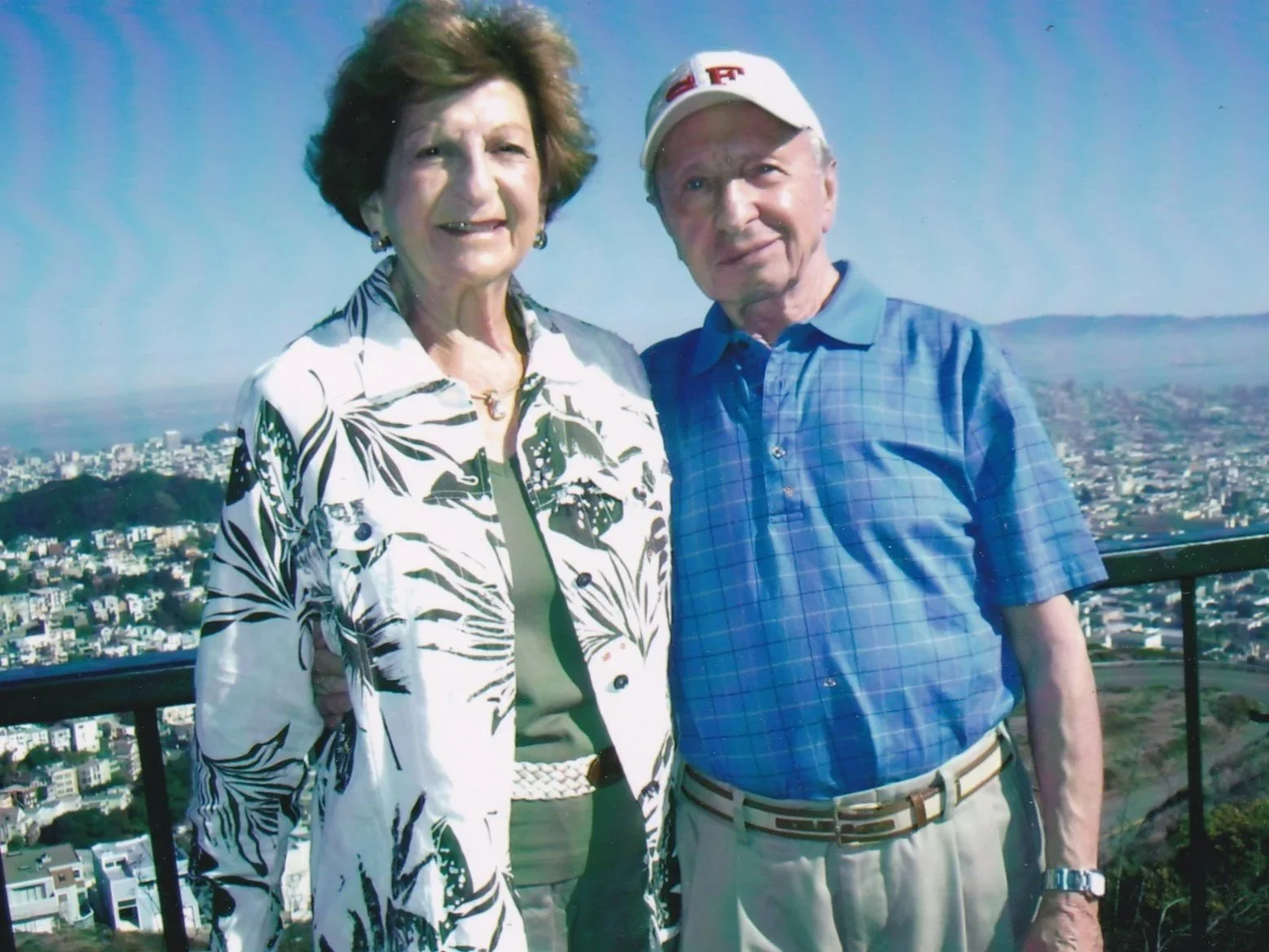
Lilli Kirsh with her husband, Henry
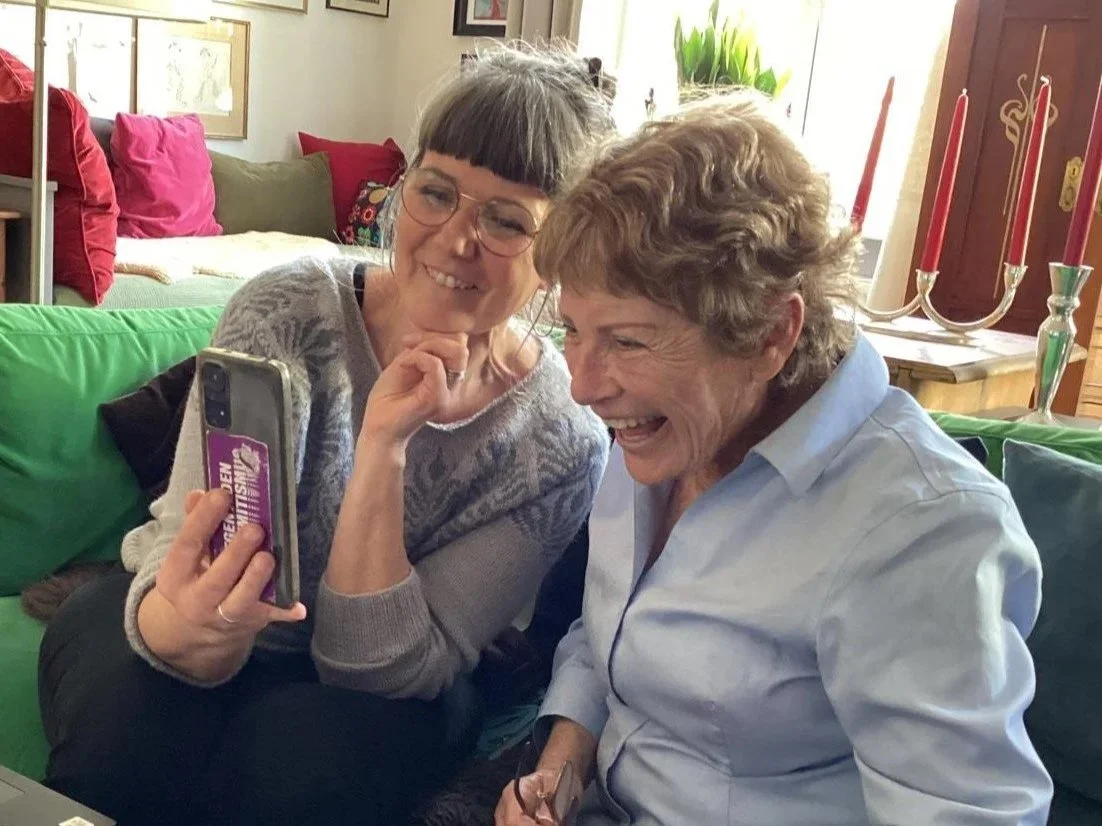
Ellen Grünwald with Barbara Tsur
Focus on the future
Eberswalde has a fraught history, including one nationally known crime. In 1990 neo-Nazi skinheads assaulted and murdered Amadeo Antonio, an Angolan man who was working as a butcher, in one of the first prominent cases of racial violence in reunified Germany.
Grünwald understands the interconnectedness of antiracism and remembrance work. When she teaches school children, she emphasizes the individuality of victims and shows that Nazi persecution took place on the local level, on the streets and in the buildings that are still standing, and that this was achieved through the complicity of the townspeople, active or passive.
In all of her initiatives, Grünwald involves the broader community, inviting survivors to speak, partnering with universities, and organizing volunteers. She fosters a sense of shared responsibility and collective stewardship for remembrance, which she hopes will continue into the future.
Some of the most rewarding aspects of her work have been the unexpected coincidences that have emerged. When her son completed an internship at the The Shoah Memorial in Paris, he showed the Eberswalde memorial book to his supervisor. “She leafed through the book and said, ‘I don't believe it. My great-uncle's name is in here.’” Grünwald says. “We had no idea what had happened to this family. And then we found out that they were able to flee to Palestine.”
And those are the stories Grünwald is interested in sharing. “Now, I want to focus on the future and tell the stories of the people who survived,” she says. “It’s important not to reduce the survivors to victims but to show that they were successful, started families, and took up professions. We will show that, too.”
What began with one mistaken doorbell ring nearly two decades ago still moves through Eberswalde, illuminating the traces of a community that had been all but forgotten.
— Obermayer Award recipient 2026