
“I never imagined it would work so well”
Daniel Burmann’s foundational book builds bridges for Jewish families and reconnects them to their history.
by Toby Axelrod
Daniel Burmann brings people together. Across oceans, across generations. All of them with a connection to the former Jewish community of Markt Berolzheim.
Burmann, who lives with his family in this small Bavarian town, is a chief inspector and trains new recruits at the local police academy in Eichstätt, about 35 kilometers (21 miles) away. On his own time, he has spent more than a decade gathering information about local Jewish history. His search has led him into the past and to distant continents to meet descendants of Jews who once called Markt Berolzheim home.
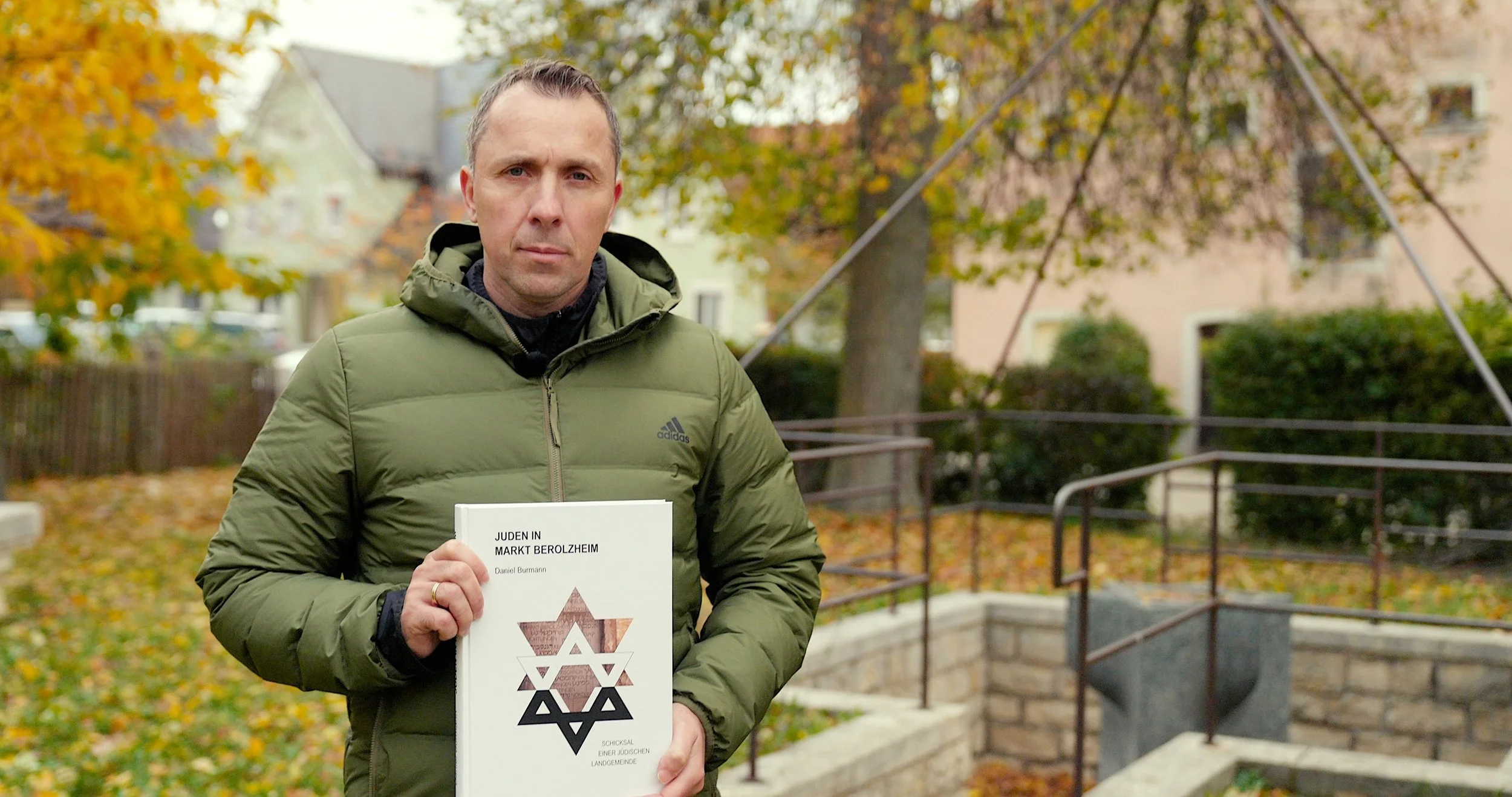
In 2023 he published a 614-page chronicle of local Jewish history, “Jews in Markt Berolzheim – The Fate of a Jewish Rural Community”(Juden in Markt Berolzheim – Schicksal einer jüdischen Landgemeinde).
“My original intention was remembrance, keeping their stories alive,” says Burmann, 47, “But the book has also built bridges. That’s an effect I hoped for, but I never imagined it would work so well.”
Berlin-based Jewish publicist Rafael Seligmann, whose grandmother, Klara Engel, came from Markt Berolzheim, has described the book as “a monument to the Jewish soul of his town.”
In recent years Burmann has met many descendants of local Jews, whether in Europe, Israel, New York, or in his own village. “Daniel spent two whole days driving us to various places, treating us to home-cooked food, and explaining the history of the Jewish community of Markt Berolzheim in relation to our family,” says Daniel DiPietro of Howell, New Jersey, who visited in 2023.
Burmann also helped DiPietro find the original birth certificate of his grandfather, Max Engel, “which we needed to regain German citizenship. And when Daniel finished his book, he gave us a copy [of that].”
“People come to us, often a bit reserved at first because they don’t know what to expect. And then they leave as friends.”
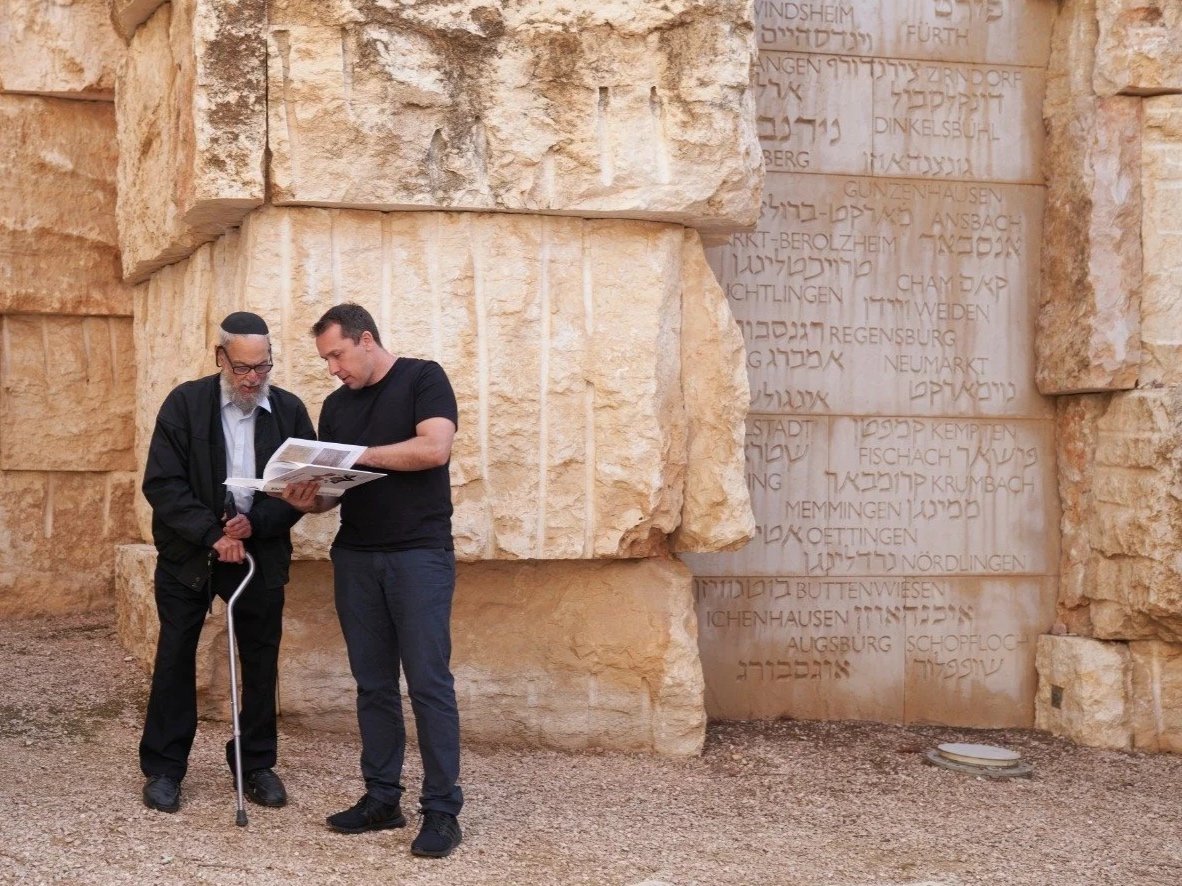
At Yad Vashem
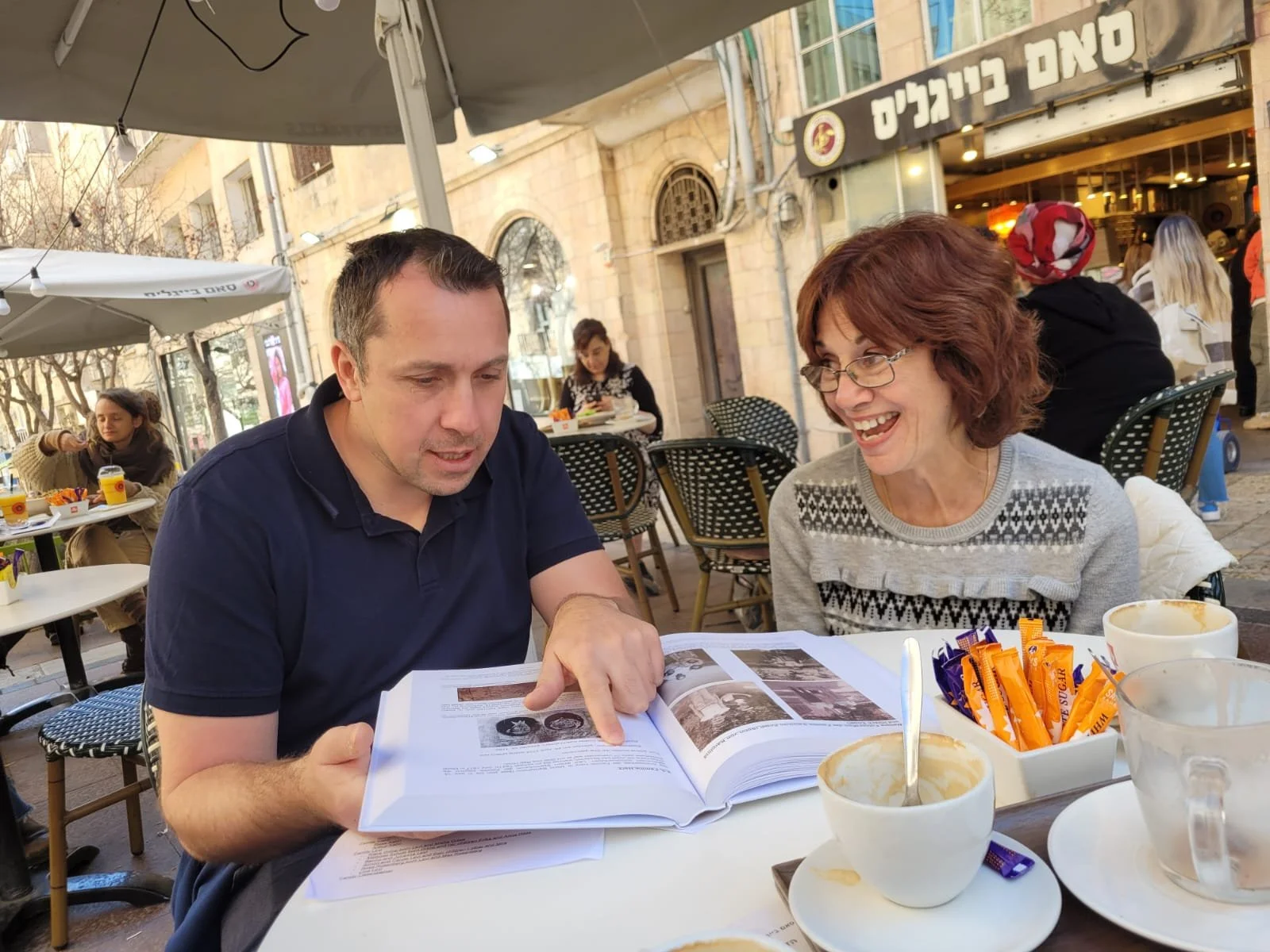
Daniel Burmann and Lin Herz
Susan Greenfeld Harans of Pikesville, Maryland, was one of some 60 people who attended a gathering Burmann organized in New York City in April 2025. “It was a fantastic event,” notes Harans, whose grandmother, Betty Lowensteiner Hellman, was born in 1922 in Markt Berolzheim. “In fact most of the families — who would have been neighbors had it not been for the dark times of the Holocaust — had never met before.”
Markt Berolzheim, population today about 1,400, was historically a cattle trading village. Its small Jewish community dated to the late 16th century and included a synagogue, a school, and a ritual bathhouse. In 1910, 67 Jews lived in Markt Berolzheim. Under the Nazi regime, they suffered such abuse that all had left the town by November 1938. Most of those who remained in Europe were murdered in the Holocaust. A memorial dedicated in 1998 recalls this past.
Burmann was born in 1978, in the nearby town of Gunzenhausen. He remembers his grandmother “telling me as a child that there had been Jewish families in Markt Berolzheim. But that was all — she didn’t really know more because she herself was still a small child when the Jews had to leave” during the Nazi era.
In 1998, when he was 20, Burmann attended the inauguration of the memorial there. “I went because I was interested, but the links weren’t really there yet [for me].” It would be a while before he would begin making those connections to the descendants of the lost community.
After finishing school, Burmann completed his compulsory military service with the German Army. “I actually liked the camaraderie,” he says, “so I thought, maybe the police [force] is something for me.”
“A symbiotic friendship”
He began his career in 2001, inspired by a youthful vision that he could “help a lot of people.” His interest in history reemerged in 2014, when he organized an exhibition on local men who had served in World War I. Digging for sources, he found a 1920s chronicle by a local pastor who interviewed local soldiers. “That’s where Jewish names popped up for the first time,” says Burmann. “Because of course, Jews also fought for their country.”
He started asking what happened to the 22 Jewish soldiers after the war. “That’s when I first found out that some had died in the Holocaust and where they’d been deported,”he says. “It was a trigger moment. When you suddenly see the connection between the Jews from your own village and Auschwitz or Treblinka, you think, good lord.
“And that’s when I realized: I have to write this down so they won’t be forgotten.”
Over three years, working nights and weekends, he gathered information about soldiers of all ilk. He also became the town’s volunteer archivist, prompted by the need to organize local historical material. It was during this period that he reached out by email to Lin Herz, who lives in Florida. He asked if she was related to the Herz family of Markt Berolzheim. She wasn’t; her paternal ancestors were from North Rhine–Westphalia. But by coincidence, she was, in fact, a descendant of the Levi family of Mark Berolzheim on her mother's side.
Burmann, says Herz, told her “he could find information about the Christian soldiers very easily, but he couldn't find anything about the Jewish soldiers.” Lin Herz was born in New York to parents who had fled Nazi Germany. Her parents had met in a New York club for German Jews.
“I had information about my grandfather's service and his discharge papers and something that he wrote about what happened when he served in World War I,” she says. And Burmann had names and information about Jewish families from the town, including her ancestors.
“So we developed a symbiotic friendship,” she says. “He would help me with my genealogy, and I would help him with information [for] his book.”
The resulting 425 page book — “War Chronicle for Markt Berolzheim 1914-1918,” published in 2017 – includes a chapter about the long-forgotten Jewish soldiers.
A year later Burmann attended a commemorative event at the Dachau concentration camp memorial with his local pastor, where he received “a huge amount of new information” about Jews from his village who had been imprisoned there.
“That’s really when things started in earnest,” says Burmann. He began research for what would become his massive book on local Jewish history. “I often worked on it in the evenings once the kids were in bed,” he recalls.
The writing itself was difficult. “I spent a lot of sleepless nights,” he says. “When you learn who was murdered and how it happened, you can’t just write ‘they were murdered.’ You try to find details: where it happened, what exactly happened, how the deportations worked. You read testimonies, survivor accounts, all of it. The horror becomes more and more tangible.”
“Why are you doing all this?”
In 2023, Burmann and his family brought a copy of the manuscript to Yad Vashem, Israel’s Holocaust memorial and museum. For the first time, he met descendants of Jews from Markt Berolzheim, some of them – like Lin Herz – flying in from the United States.
One of them asked if the Burmanns were Jewish. No, he answered.
“The reaction was kind of, ‘Then why are you doing all this?’ I simply said that although we’re not Jewish, we also carry responsibility. For example, my great-grandfathers were Nazis. So I think it’s even more important that someone from the perpetrator side, from the place itself, takes on this work.”
He told them, “I wrote the book so the victims wouldn’t be forgotten.”
Burmann raised money to publish the book himself, with help from his father. He brushed off suggestions that he shorten the work to make it less expensive to print. “I can’t just remove people,” he replied.
The tome came out in 2023. Almost 200 people attended the book launch, held at a local church. There was a line, going out the door, of people waiting to buy the book, says Herz. “We were astounded. And it was all because of Daniel that they were learning about this, cared about this, and were going to learn more. All because of Daniel.”
Since publication, Burmann and his family have had 20 or so visits from people with roots in the local Jewish community. “It’s incredible how everything has developed over time,” says his wife, Kathrin. “At the beginning there was interest in the book itself, in the story. And then, over the years, more and more contacts developed.
“It’s like when you throw a stone into water and the circles keep getting bigger, [with] no idea where it will end. The emotions — what you witness or feel yourself — are overwhelming,” she says. “People come to us, often a bit reserved at first because they don’t know what to expect. And then they leave as friends.”
Many of these new contacts wrote letters supporting Burmann’s nomination for an Obermayer Award, which his family kept secret from him. “Seeing what my dad’s work meant to all these people and how deeply it touched them, that was incredibly moving for me, too. It definitely made me very proud,” says his daughter, Mia, who is studying history and English at university in Eichstätt.
“At some point it will be our responsibility to protect democracy,” she says of her generation. “And I think this kind of remembrance work is one way to do that.”
For many descendants, Markt Berolzheim had been “just a blank spot, something they didn’t want to deal with, and they themselves weren’t seen either,” says Burmann. “That’s changed.”
The discoveries do not cease. In August 2024 Joshua and Amanda Gurock, of Albany, New York, brought an old photo album to Markt Berolzheim. It contained photos of Jewish villagers, carefully labeled by Joshua’s late grandfather, Günther Schloss, who was born there.
“Under one photo was the name Lina Levi. And I thought, oh God — she’s in my book but without a photo. She was murdered by the Nazis,” says Burmann. He sent a copy of the photo by email to Lin Herz. Lina Levi was her great-aunt.
He began with the words “Sit down, I have a surprise for you,” Herz says. “And then I open up this email and it has a picture of a woman. Suddenly, her face is there.”
Because his book had not included Lina’s image, Burmann wrote an article about her for the local history publication Alt-Gunzenhausen (Old Gunzenhausen) in 2024. “I feel like she's been honored now, the way the others were in the book,” says Herz, who wishes her late mother could have seen the photo. “That would have made her happy.”
Herz finally held the photo album in her hands last April, at the gathering that Burmann organized in New York City. He invited all the American descendants to a Berolzheimer Abend. (Berolzheimer Evening).
“There were cousins I've never met before, including two fifth cousins once removed,” Herz says. “These people in that room would have never been together had it not been for Daniel. So it was building back the community that would have been.”
— Obermayer Award recipient 2026
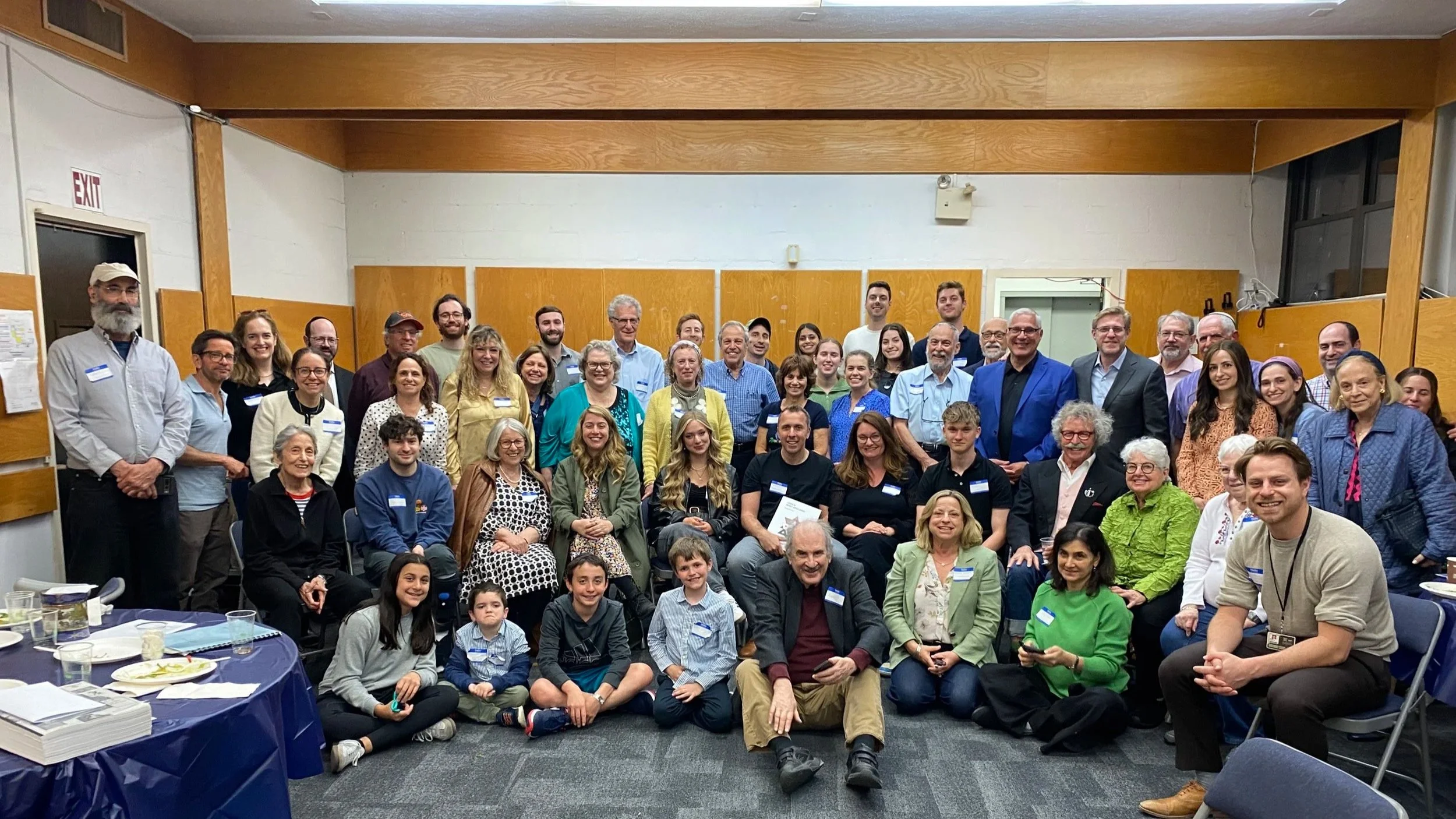
Berolzheimer Abend in New York City